Trip Report
Central Peru Birding Tour
February 18, 2026
In November 2025, we traveled with a group of six birding friends to Central Peru in search of endemic bird species with small and highly restricted ranges. At the same time, we experienced Peru’s extraordinary diversity of landscapes: coastal desert, dry inter-Andean valleys, high Andean peaks and lakes, puna grasslands, Polylepis forests, elfin and cloud forests, and finally the edge of the vast Amazon Basin. In this trip report, we take you along on our journey and share some of the most memorable bird encounters with endemic and other fascinating species.
Our route began in the Lima region, crossing the coastal desert before reaching the western foothills of the Andes. Here we searched for endemics adapted to dry valleys, such as Great Inca-Finch and Black-necked Woodpecker. From there we climbed higher into puna grasslands and Polylepis forests in search of species like Striated Earthcreeper, White-cheeked Cotinga, and Dark-winged Miner, as well as rarities such as the Diademed Sandpiper-Plover and the critically endangered White-bellied Cinclodes.
We visited Lake Junín (4,000 m), home to the critically endangered Junin Grebe and Junin Rail, before crossing the Andes to the east. A large part of the tour was spent in elfin and cloud forests, including legendary sites such as Bosque Unchog, Satipo Road, and Bosque Sho’llét, in search of highly localized endemics, some only recently described by science.
Day 1 – From Lima to the Andes
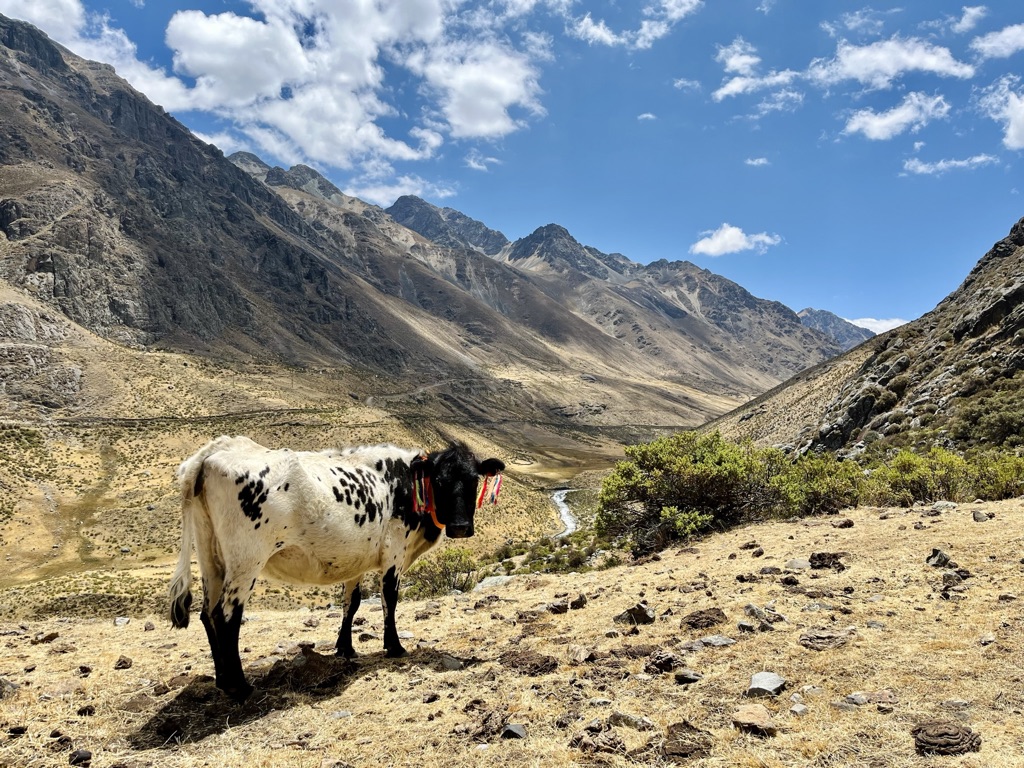
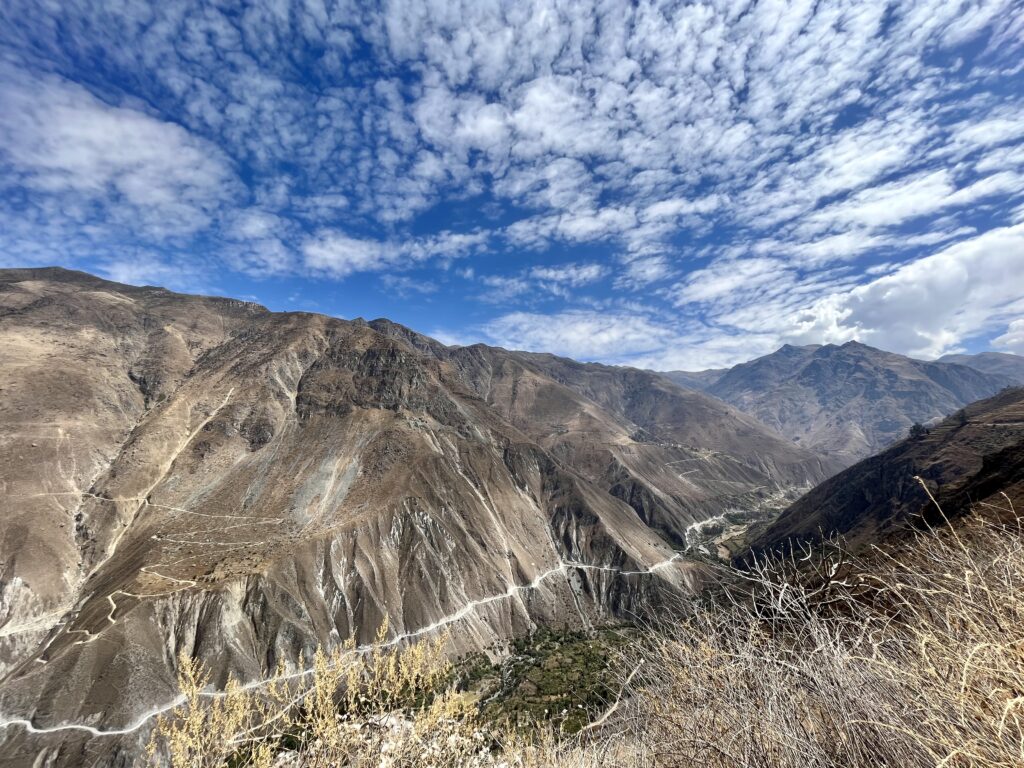
Early in the morning, we left the busy city of Lima and headed east toward the Andes, crossing the vast coastal desert. After about two hours, we arrived at the base of the Andes Mountains and began our ascent along the Santa Eulalia Valley. The bumpy dirt road offered spectacular views of towering mountains and into a deep valley with a river far below.
Our first birding stop was immediately rewarding. We enjoyed watching a male Peruvian Sheartail, his fully grown tail shimmering as he fed from flowers alongside a female. Nearby, two Peruvian Pygmy-Owls were calling.
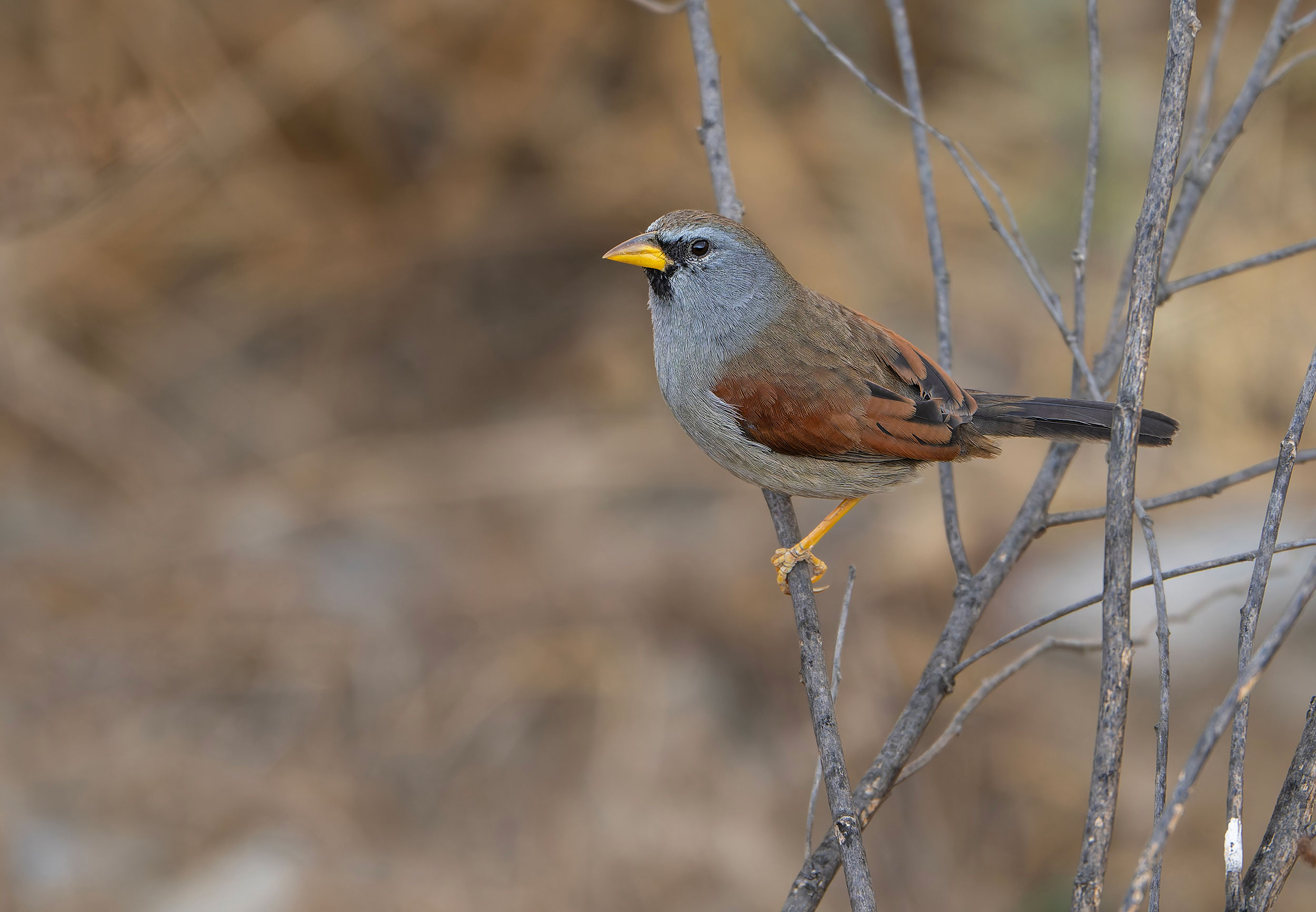
One of the highlights of the morning was excellent views of the endemic Great Inca-Finch — a large, finch-like tanager restricted to the central western slopes of the Peruvian Andes, between 1,500 and 2,100 meters in elevation. This species prefers dry, hot slopes and canyons with succulent vegetation and is often seen perched on the top of a bush. We found it exactly this way, singing vigorously from an exposed branch.
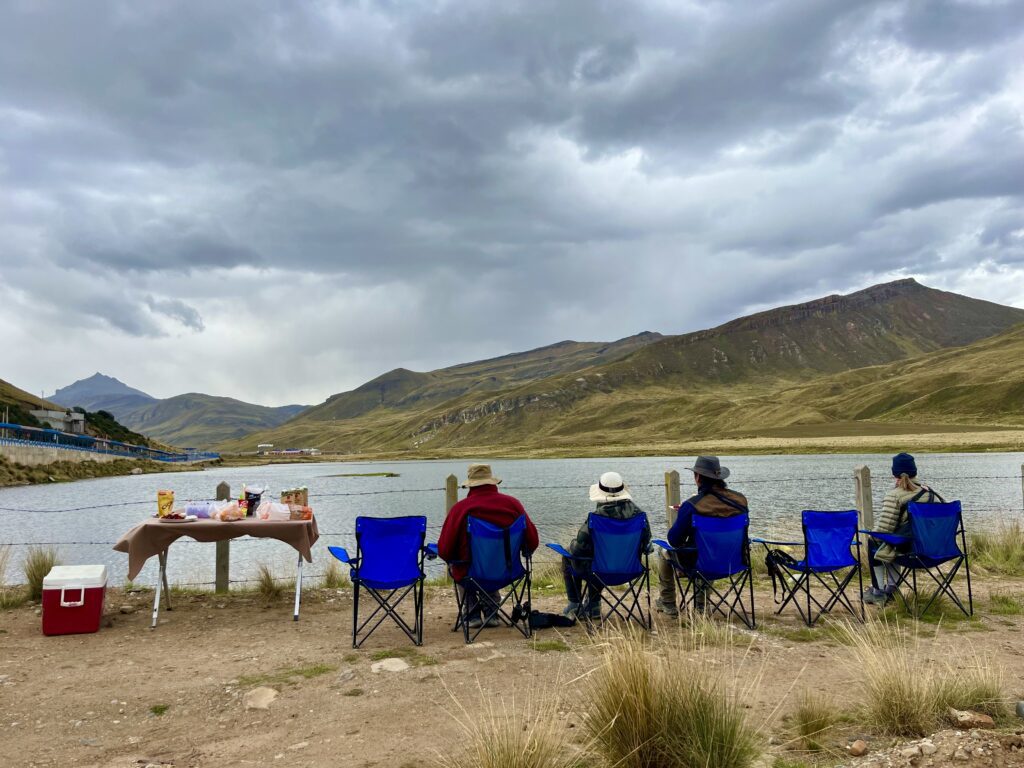
Our driver, Miguel Vásquez, prepared us a tasty picnic lunch in the field—complete with chairs and a table to enjoy the nice views of the deep valley at the same time.
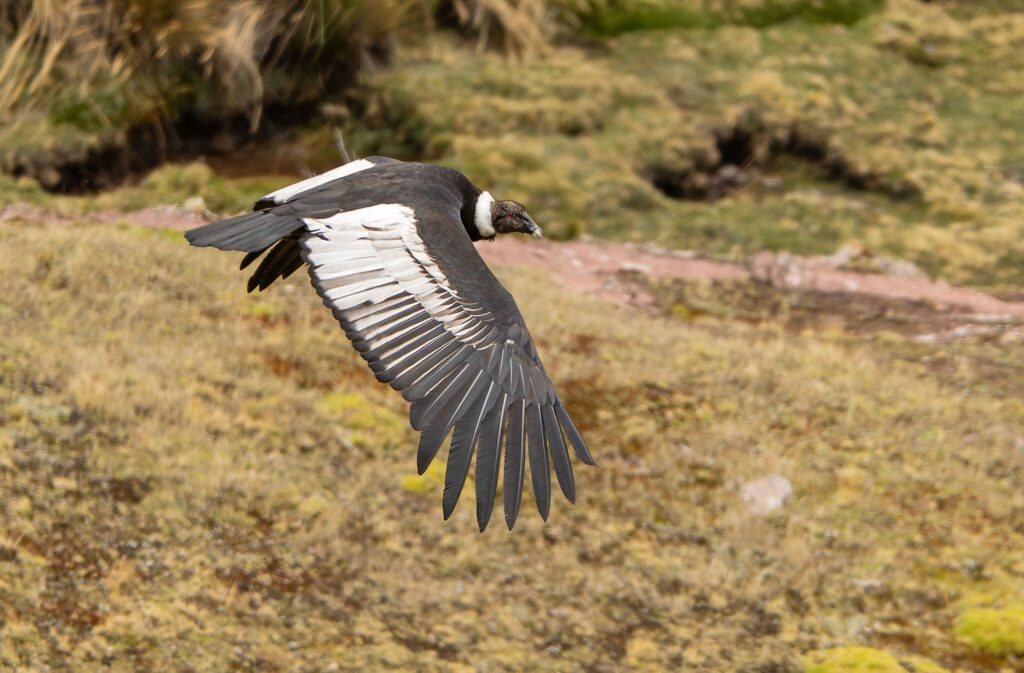
After lunch, we experienced our first condor moment. A pair of Andean Condors soared through the valley, pursued by a Black-chested Buzzard-Eagle. While the eagle is a large raptor itself, it looked remarkably small as it chased the massive condors, even attempting to nip at one bird’s tail.
Later in the afternoon, we had a brief but exciting sighting of the endemic Bronze-tailed Comet. This nice hummingbird inhabits arid scrub and woodland in montane areas along the Pacific slope of the Andes and in dry Andean valleys. Although it is widespread in Peru, it remains uncommon, and little is known about its behavior.
Other species recorded that day included Oasis Hummingbird, Pied-crested Tit-Tyrant, Yellow-billed Tit-Tyrant, and Collared Warbling Finch.
Another endemic highlight was a beautiful Black-necked Woodpecker. This species is restricted to the western slopes of the Peruvian Andes, where it inhabits wooded riparian areas, semi-arid cloud forests, montane and desert scrub, orchards, plantations, and even gardens. It can occasionally be found above the tree line.
We reached an altitude of 3,800 meters that day, helping our bodies acclimatize for the higher elevations to come. In the evening, we returned to Santa Eulalia for the night—already having recorded several endemics and getting a promising taste of what the coming days would bring.

Day 2 – Lake Milloc and the Marcopomacocha Pass
We began the day early, departing at 5:00 a.m., with many meters of elevation to gain—thankfully by car! One of the most fascinating aspects of Andean birding is how vegetation and birdlife change dramatically with altitude.
Miguel once again proved his skill as a driver, navigating steep canyons where looking out the cat window made hearts race and palms sweat.
The day brought both heat and cold, requiring layers of clothing as we ascended. Along the way, we spotted a pair of Torrent Ducks effortlessly swimming upstream in fast-flowing water, showcasing their incredible adaptation to mountain rivers.
A Black-breasted Buzzard-Eagle stared majestically down at us from a rock wall.
At around 4,200 meters, we stopped to search for the endemic White-cheeked Cotinga, and luck was on our side. Although the view was brief and distant, seeing this rare species—restricted mainly to Polylepis forests—was deeply satisfying. The White-cheeked Cotinga feeds almost exclusively on mistletoe berries. It is the only frugivorous bird in Polylepis forests within its range, so the White-cheeked Cotinga is likely the primary seed disperser for these plants. The species is classified as Near Threatened due to habitat loss.
Other noteworthy high-Andean endemics we observed in the area included Rusty-crowned Tit-Spinetail and Black Metaltail, a hummingbird that is mostly black with subtle hints of red and green and the cheeky white spot behind the eye, present in many hummingbird species.
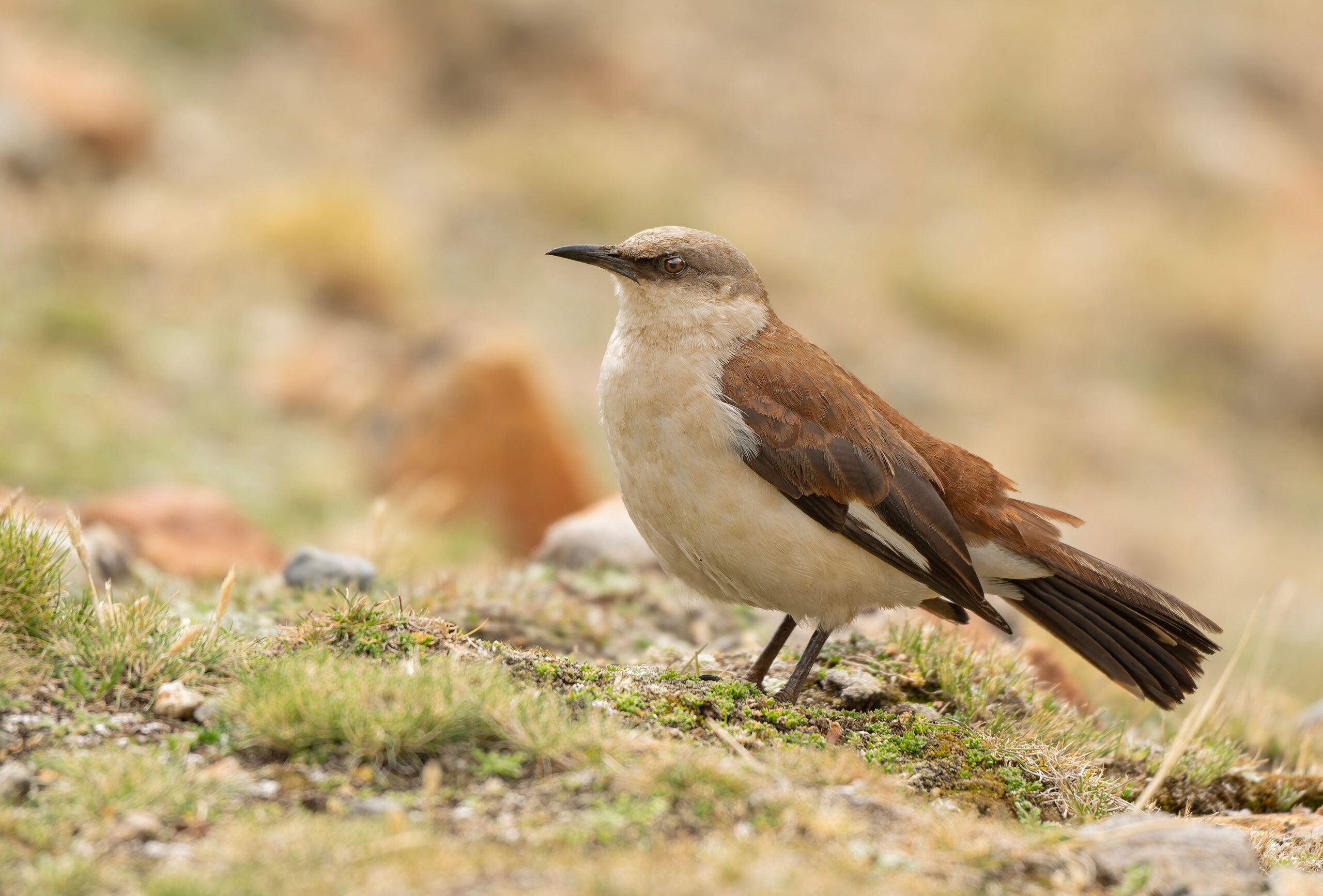
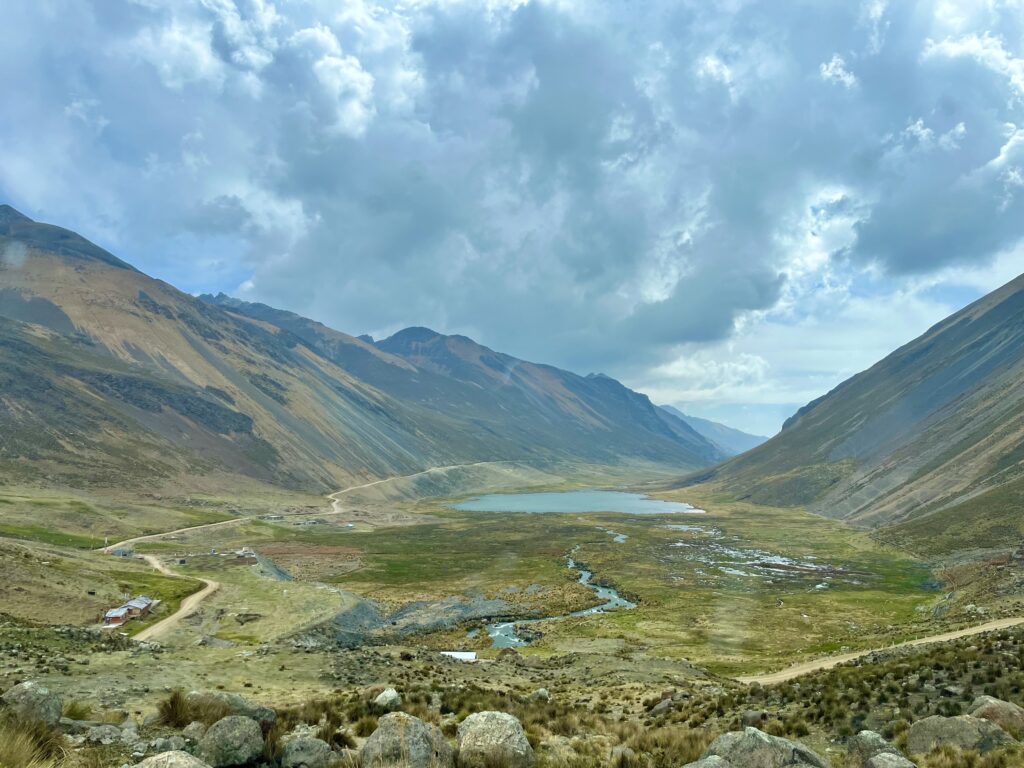
At Lake Milloc, near 4,800 meters above sea level, we encountered one of the tour’s highlights: endemic White-bellied Cinclodes. A confident pair performed a display right in front of us, offering unforgettable photo opportunities. For a moment, we forgot about the biting wind and thin air—this time it was the bird, not the altitude, that took our breath away.
The White-bellied Cinclodes is one of the most elusive birds of the high Andes. Found only in west-central Peru—in the departments of Lima, Junín, and Huancavelica—this species is known from very few localities. It lives at extreme elevations between 4,450 and 5,000 meters, restricted to bogs with cushion plants, mainly Distichia, and often near rocky outcrops or stony slopes. Primarily insectivorous, its diet remains largely a mystery.
With its patchy and highly specialized habitat, the White-bellied Cinclodes is usually rare and even absent from some areas that seem suitable. The total population is thought to number fewer than 250 individuals (BirdLife International 2013). Its fragile bogs face increasing threats from mining, peat extraction, and overgrazing, making each sighting a truly special encounter for those fortunate enough to witness it.
In the lake below us, we observed Giant Coots, Puna Ibis, Crested Ducks, Andean Geese, and, in the surrounding puna grasslands, a variety of finches and specialists: Glacier Finch, Bright-rumped Yellow-Finch, Plumbeous Sierra-Finch, White-winged Cinclodes, Cream-winged Cinclodes, Streak-backed Canastero, Streak-throated Canastero, Puna Ground-Tyrant, and Buff-breasted Earthcreeper.
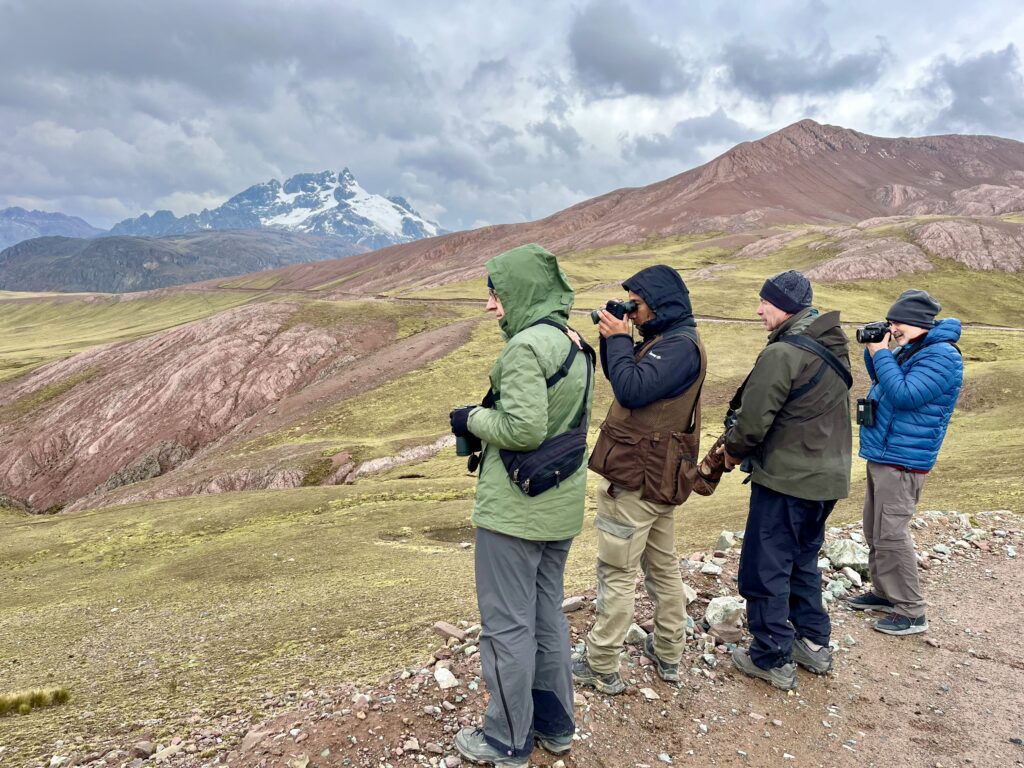
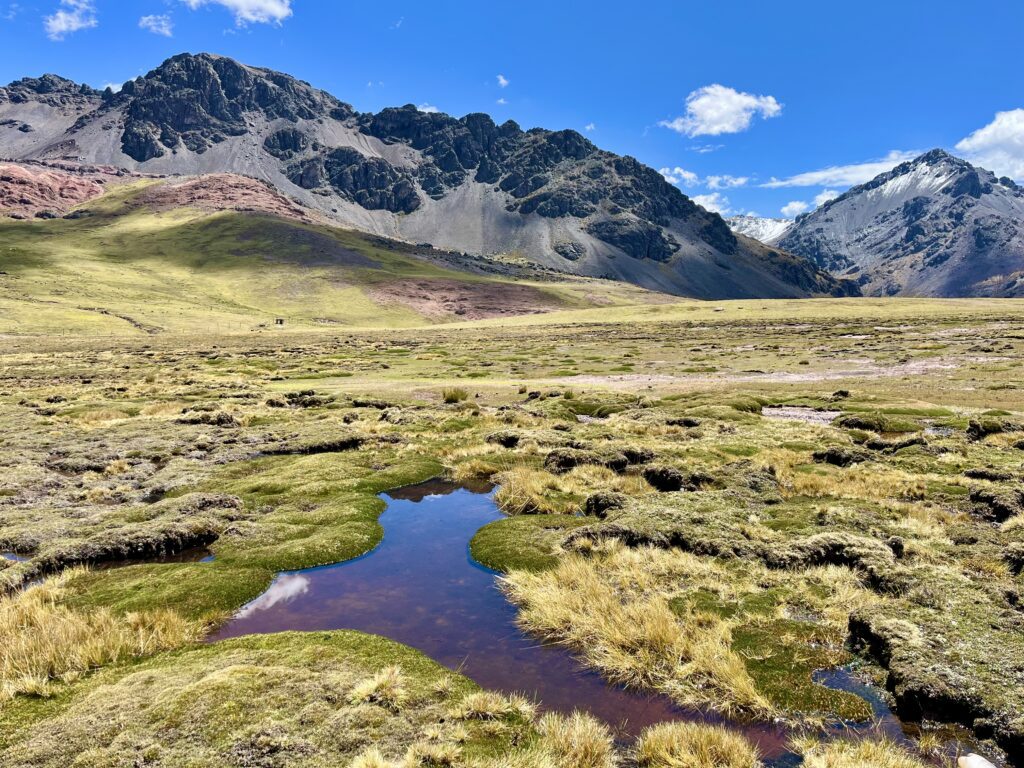
After a cold lunch at Lake Milloc, we continued driving higher and entered an almost otherworldly landscape that made one think of Tolkien’s “Mordor,” with gray rocks and scattered lagunas. The scenery transformed again into striking pink and green rocks and vast, boggy plains with grazing alpacas, llamas and sheep.
At the highest point of the day, Marcopomacocha Pass (4,870 meters), we encountered Andean Lapwing, Andean Flicker, Taczanowski’s Ground-Tyrant, Puna Ground-Tyrant, and Glacier Finch, while Viscachas huddled together for warmth in the cold wind. A herd of sheep grazed peacefully, and the only sounds were the calls of mothers and lambs drifting across the wind-swept plains.
We spent the night in San Mateo, a small mining town at 3,000 meters. The lady of the cozy lodge served us a hearty dinner and warm muña tea (Andean mint), a perfect ending to a day in the high Andes.

Day 3 – High Andes and Polylepis Forests
The next morning, we returned to the high altitudes. The sky was blue and the sun shone brightly. In the boggy plains at 4,500 meters, we searched for another highlight species: the Diademed Sandpiper-Plover. This exceptionally beautiful and rare bird is high on the wish list of many birders and bird photographers.
The Diademed Sandpiper-Plover is resident in high-elevation bogs in the Andes, ranging from central Peru south to south-central Chile and Argentina. In Peru, its elevational range is between 4,100 and 5,000 meters above sea level. Little is known about this species, that is listed as Near Threatened. The Diademed Sandpiper-Plover forages in cushion-plant bogs, usually alone or in pairs, rarely in larger groups.
We tried our luck at the first boggy spot, and our wish was immediately granted. The beautifully diademed head of a plover popped up from behind a bog. Seconds later, it revealed itself in full glory while probing the ground for food. It was not very close to us, but through our binoculars we were able to enjoy it for quite some time. Photographing the bird was more challenging due to the bright sun, and the heat waves it created. Nevertheless, we felt very grateful for this special moment.
We continued on foot in the same area in search of another special bird: the Olivaceous Thornbill. This hummingbird forages on the ground in Puna grasslands, visiting small flowers or waiting to launch itself upward to catch flying insects. It is another species about which relatively little is known. We sat quietly in the sunshine for a while, but the hummingbird did not appear. Instead, on our way back to the van, we encountered a pair of beautiful Gray-breasted Seedsnipes, as well as Slender-billed Miner, White-fronted Ground-Tyrant, Black Siskin, and a Dark-winged Miner, also endemic to the high, treeless Andean Puna of central Peru.
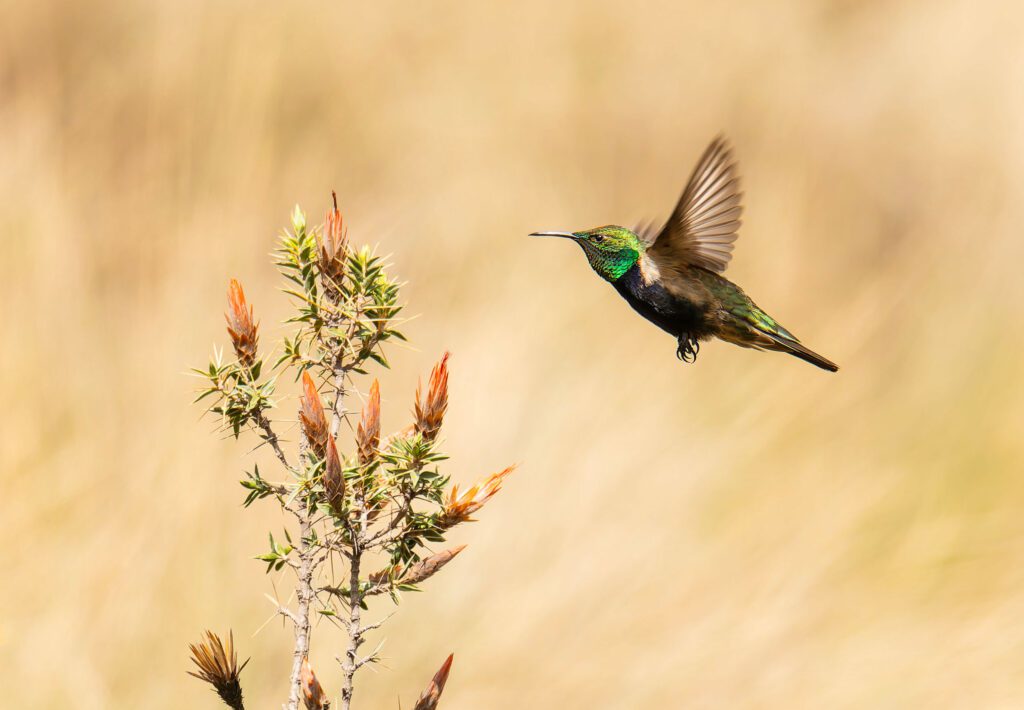
Next on the list was another hummingbird: the endemic Black-breasted Hillstar. This hummingbird is found only at very high elevations in the central Peruvian Andes. The male has a sparkling green throat and black undersides with creamy buffy edges.
We did not have to wait long for it to appear—a pretty male, first perched on a spiny flower and later on its favorite rock, the same one where we had seen it during our previous visit to Santa Eulalia.
While waiting for it to return to its rock, we noticed a female Andean Condor flying toward us. She landed in the valley below, wings spread wide. We soon understood why she had chosen that spot, as we saw a mother alpaca standing beside her dead calf. The condor waited patiently, but took off after a while. We decided to leave as well and let nature take its course.
We enjoyed a picnic lunch at a small lake high in the Andes, where we observed and photographed a pair of Silvery Grebes performing their display dance in the water. The lake was also visited by Andean Gull, Chilean Flamingo, and several species of ducks, including Crested Duck, Puna Teal, and Yellow-billed Teal. A Giant Coot was nesting in the lake.
Around the lake, we also observed Andean Goose, Andean Lapwing, Andean Negrito, Barn Swallow, Ash-breasted Sierra Finch, and Plain-colored Seedeater.
We spent the night in a comfortable hotel with a fireplace in the dining room, in the town of Concepción.
Day 4 – Lake Pomacocha and elfin forest
On our way to Lake Pomacocha, we found a handsome Striated Earthcreeper in the forest. This species is restricted to the high Andes of northern and central Peru, allowing us to add yet another endemic bird to our list.
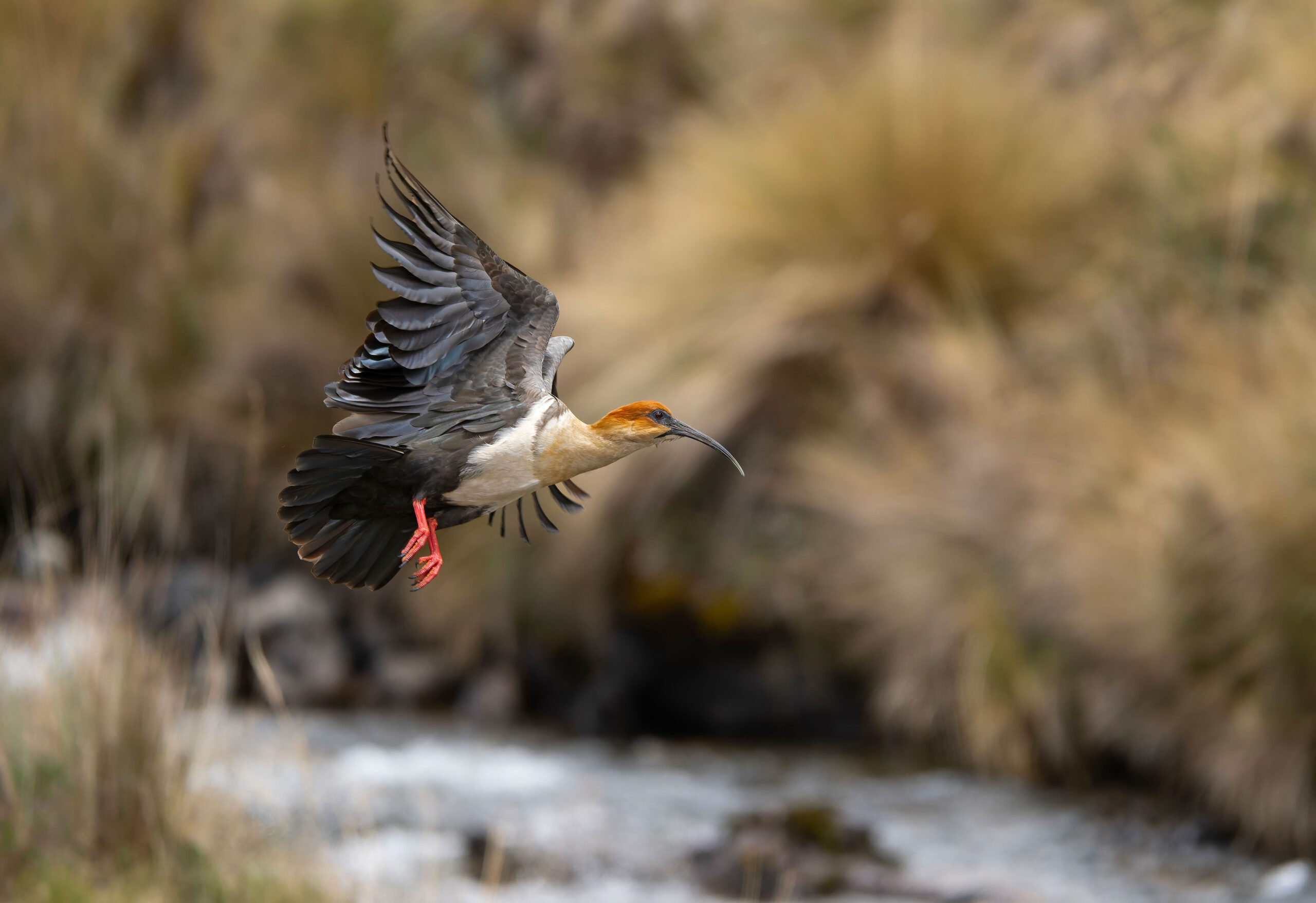
At high altitudes, near the lake, we encountered a gathering of more than twenty Mountain Caracaras and a bit further, two Andean Ibises. At Lake Pomacocha, Crested Ducks, Puna Teals, Yellow-billed Teals, Andean Ducks, Slate-colored Coots, and Silvery Grebes were swimming on the open water. Elegant Baird’s Sandpipers, long-distance migrants from the North America, were foraging along the shoreline, joined by another migrant, a Greater Yellowlegs.
In the boggy fields next to the lake, we observed an endemic Dark-winged Miner, feeding on the ground.
Around the lake we also recorded Black-crowned Night Heron, Common Miner, White-winged Cinclodes, Ash-breasted Sierra Finch, and three Bright-rumped Yellow-Finches.
After our visit to the lake, we followed the road downhill until we reached the elfin forest at around 3,000 meters above sea level.
Day 5 – From the cold high Andes to the warm lowlands of Satipo
We started very early—at 4:30 a.m.—for a long day that would take us through many different habitats, from Puna grasslands to transition forest near Satipo, and everything in between.
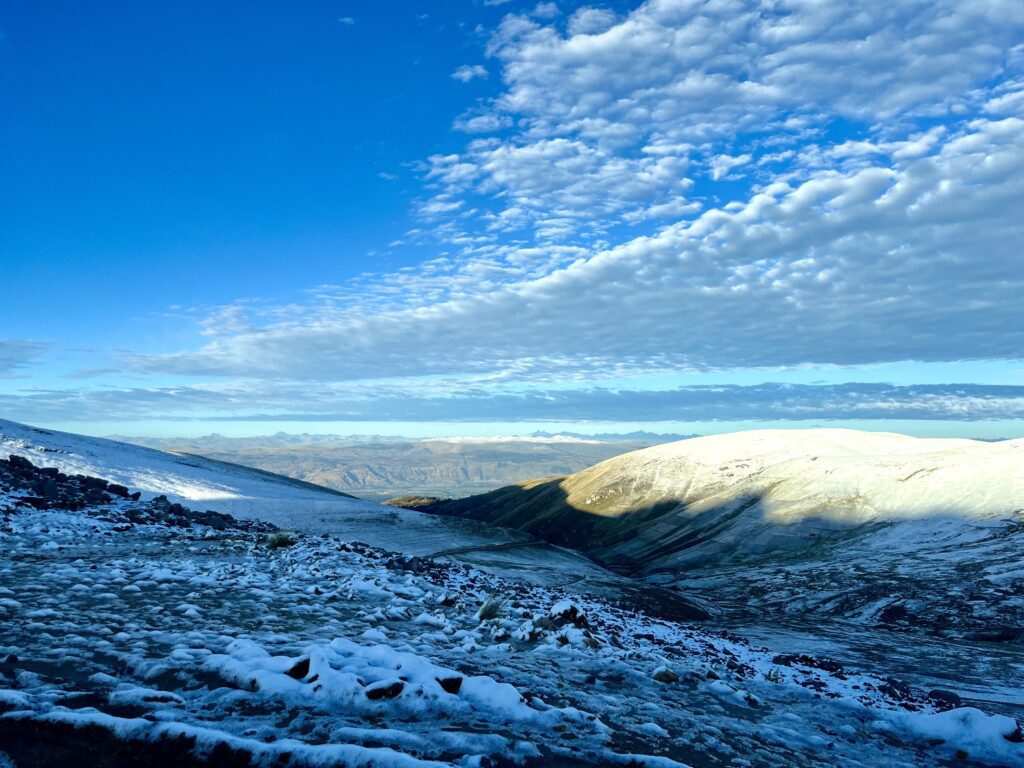
We passed Lake Pomacocha once again and were delighted to find that it had snowed during the night. The high mountains and the lake were blanketed in white. In this snowy landscape, we enjoyed a pair of Andean Ibises and Andean Lapwings, and we made a short stop to watch the sunrise over the lake—it was breathtaking.
We had breakfast in the field in the elfin forest, where we were visited by a pair of Central Peruvian endemic Slaty Brushfinches. A beautiful Purple-backed Thornbill gave us only a brief glimpse before disappearing into the lush greenery.
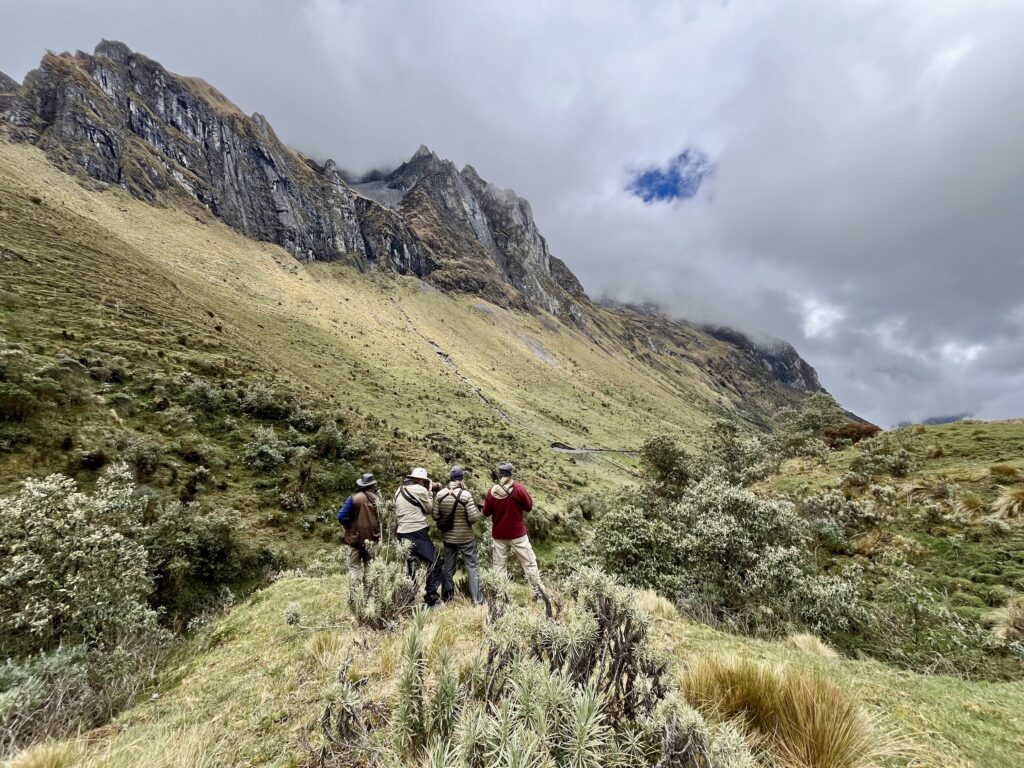
After breakfast, we enjoyed a spectacular drive along the flanks of green mountains with deep valleys below. Farmers were working their steep potato fields as we wound our way upward again toward the Puna grasslands and a unique mountain ridge. We had been on the road for only five days, yet the mountains looked different every single day. They seemed to have a million faces, each one unique and spectacular, with rocks in every color of the rainbow.
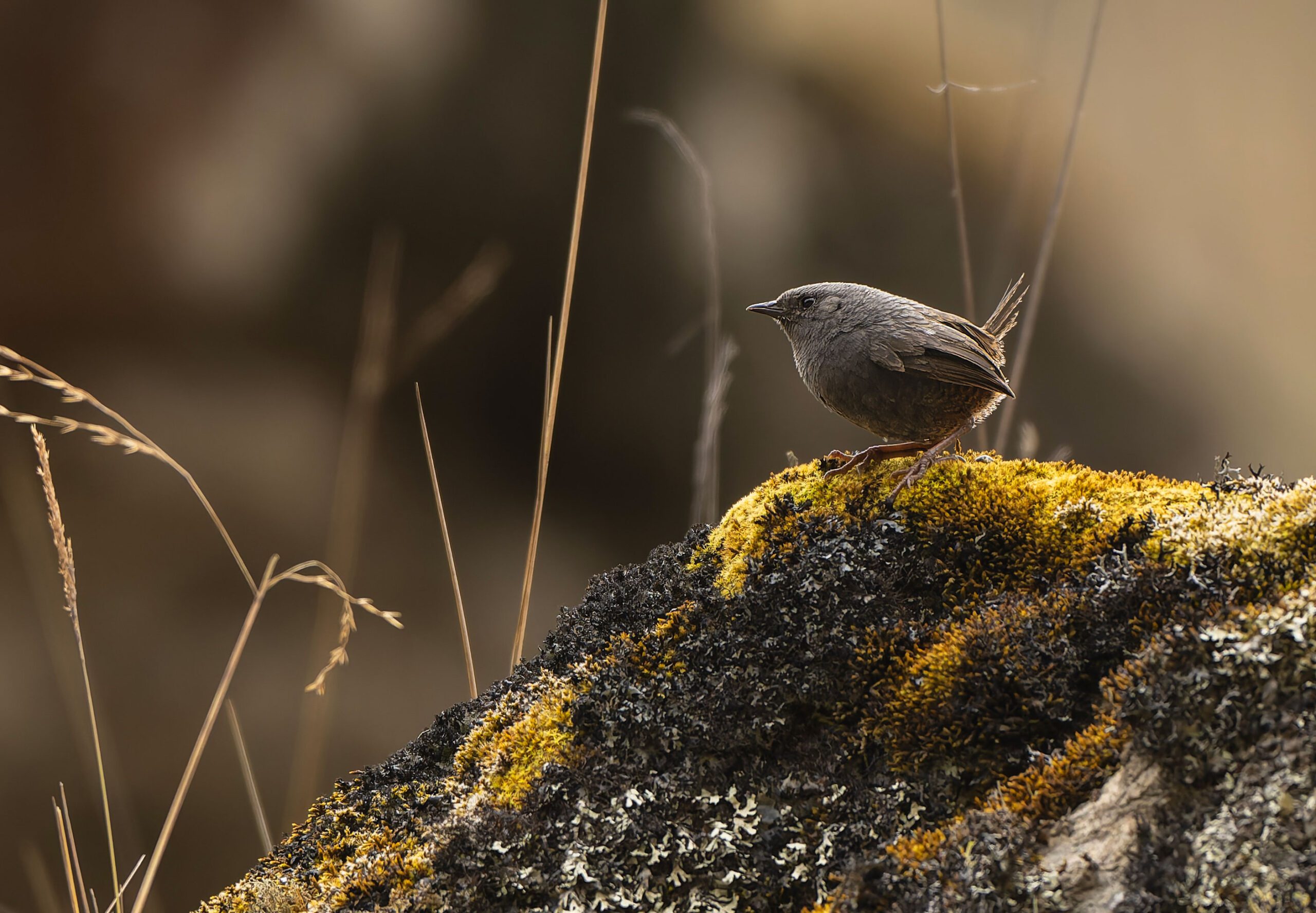
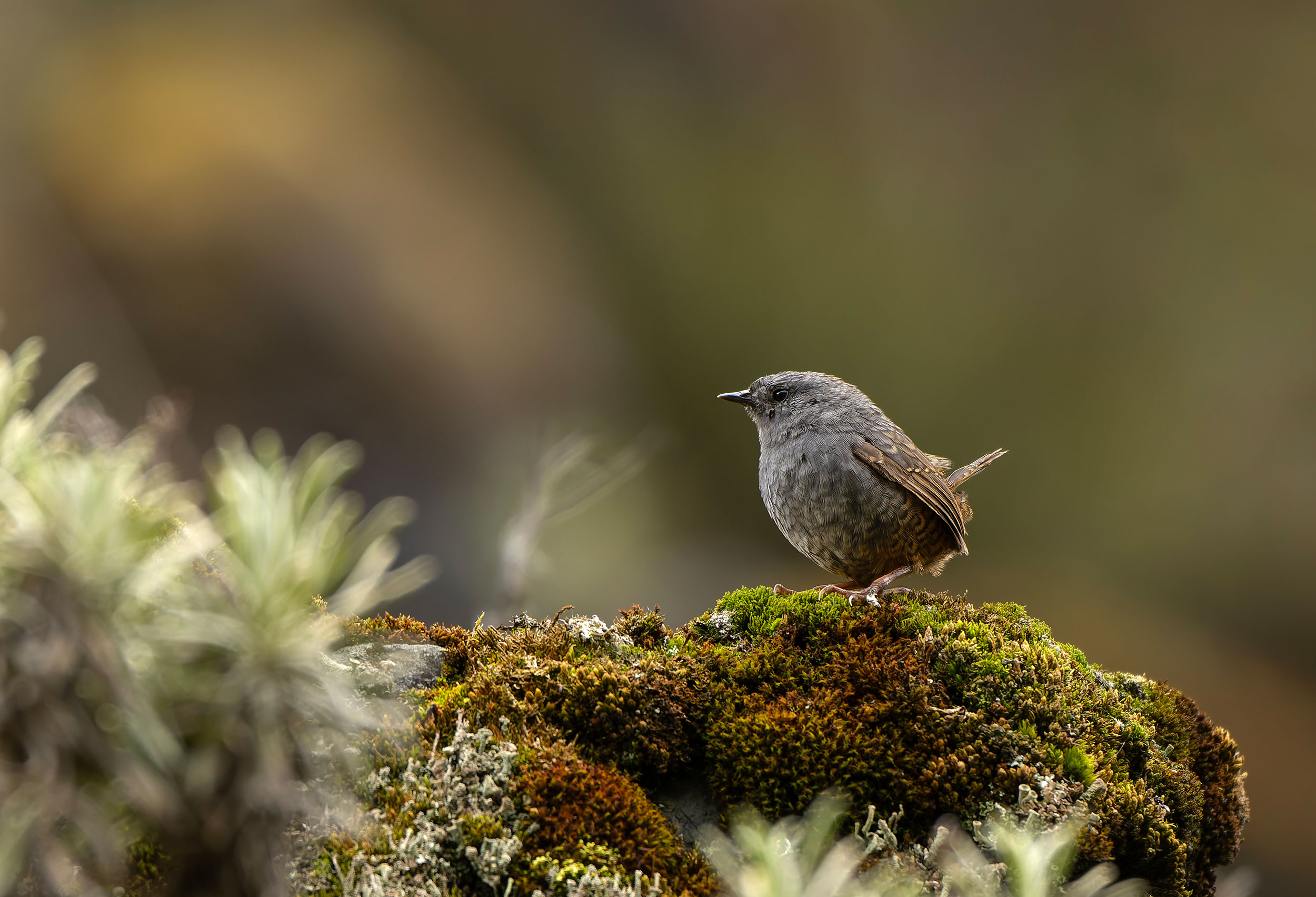
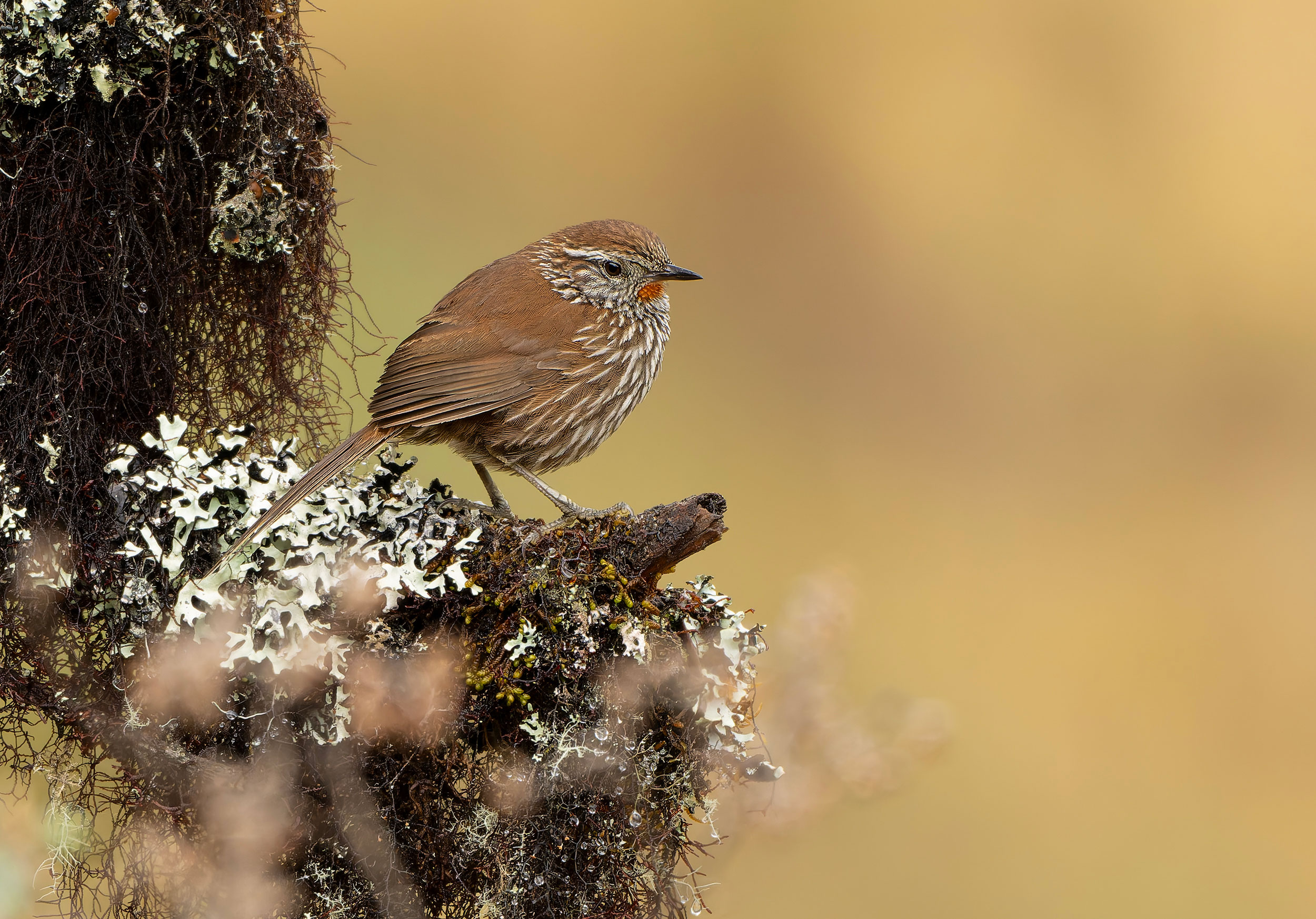
After crossing the Puna, elfin forest gradually appeared, interspersed with green pasturelands where cows were grazing, and the air was filled with the scent of honey. Flowers were abundant, as it was spring in the Southern Hemisphere. Sun and clouds alternated constantly. Here, we searched for the endemic Neblina Tapaculo. And we found one, perching atop a moss-covered rock! “Neblina” is the Spanish word for “mist,” and rain and fog are characteristic features of the very humid elfin forests where this species occurs. The Neblina Tapaculo is found along the eastern slope of the Andes in northern Peru, near the tree line.
A bit farther down the road, we encountered another highlight, found only in the Junín Department of central Peru: the Eye-ringed Thistletail. This brown and mouse-gray thistletail, with its white eye-ring, is restricted to elfin forest and the upper cloud forest near the tree line.
Two Peruvian Wrens played hide-and-seek with us, never fully showing themselves—but what a nice pair!
As the day began to fade, thick clouds and rain drifted over the mountaintops and into the forest. It was time to call it a day—long, but highly rewarding. We followed the road downhill for several more hours to Satipo, where we spent the night.
That day, we had traveled from snow-covered lake Pomacocha at 4,700 meters above sea level, with temperatures around 0°C, down to 700 meters to the warm and humid town of Satipo, where frogs sang throughout the night.
Day 6 – Transitional forest and cloud forest Satipo
We spent the morning birding along the road to Satipo, starting in the lower transitional forest—lush, green, warm, and humid. We followed the road alongside a river with crystal-clear water. Gradually, the forest transformed into cloud forest, with tree branches covered with mosses and bromeliads.
We spotted a beautiful Plumbeous Kite resting on top of a tall dead tree, and several tanagers—Paradise, Silver-beaked, and Magpie Tanager—feeding on fruiting trees.
Dusky-green Oropendolas and Yellow-rumped Caciques were busy tending their characteristic, well-constructed hanging nests.
Other species observed during the morning included Black-throated Mango, Southern Emerald-Toucanet, Slaty-capped Flycatcher, Cuzco Warbler, Yellow-throated Tanager, Paradise Tanager, Mottle-backed Elaenia with its funny crest, and a nice Long-tailed Tyrant.
Another memorable encounter was with an Amazonian Umbrellabird, although it was perched high in the canopy.
We heard the song of a Cerulean-capped Manakin. After carefully scanning the dense undergrowth, we finally spotted it. This species is endemic to central and southern Peru, and very little is known about its behavior.
During a tasty cold pizza lunch in the field, a Golden-headed Quetzal landed in a tree next to us.
We had clearly entered the realm of tanagers and were able to add Beryl-spangled, Fawn-breasted, Blue-capped, Blue-and-black, Saffron-crowned, Flame-faced, and Silver-beaked Tanagers, as well as a lovely pair of Lacrimose Mountain-Tanagers, to our list.
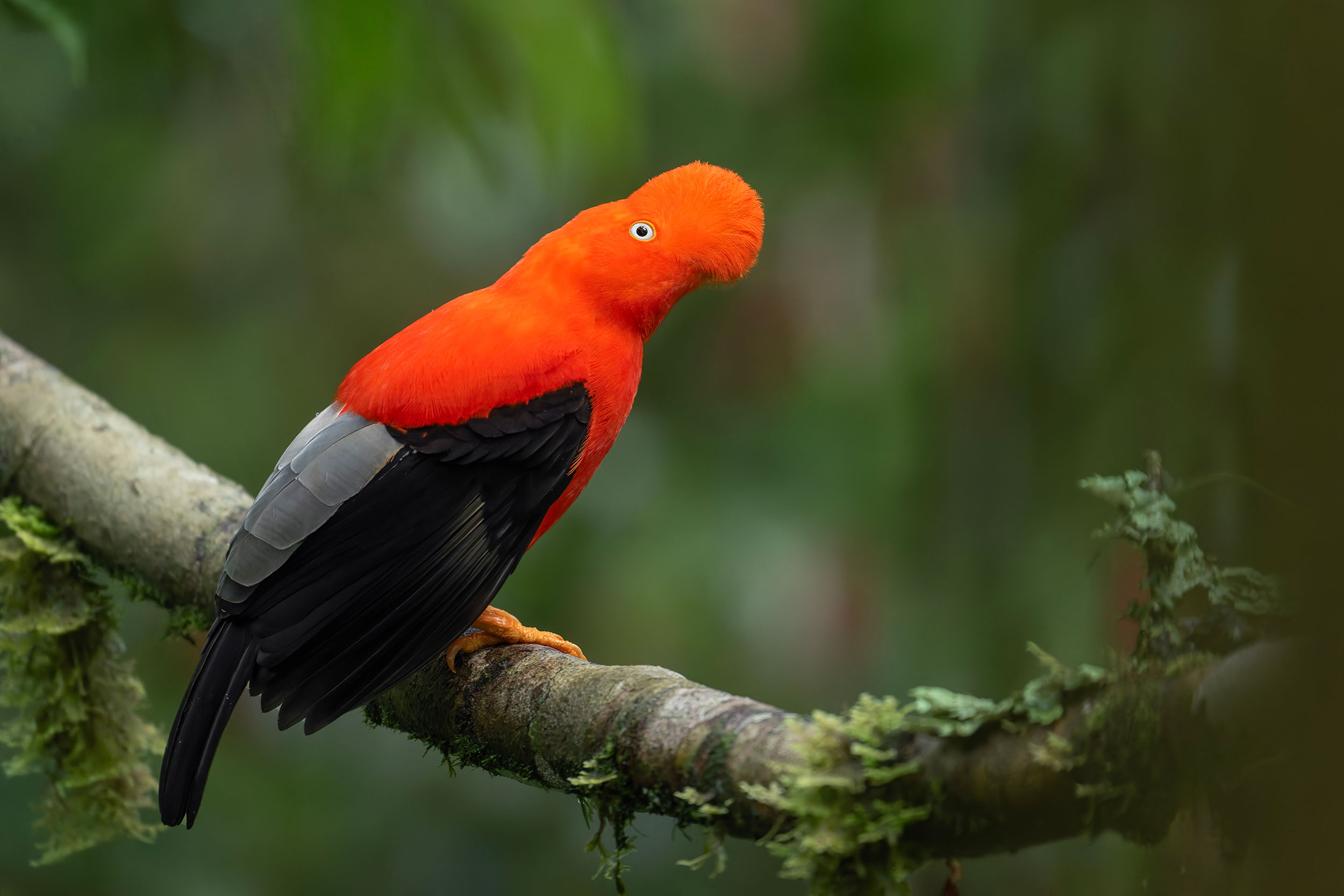
Other birds seen, either singly or in flocks, included Barred Becard, Blue-banded Toucanet, Wire-crested Thorntail, Long-tailed Sylph, Andean Cock-of-the-rock, Blue-naped Chlorophonia, Thick-billed Euphonia, Crested Oropendola, Buff-throated Saltator, and the fantastic Plushcap.
In the afternoon, we turned around at 2,500 meters above sea level and followed the road back down to spend the night in Satipo.
Day 7 – Laguna El Oconal, Villa Rica
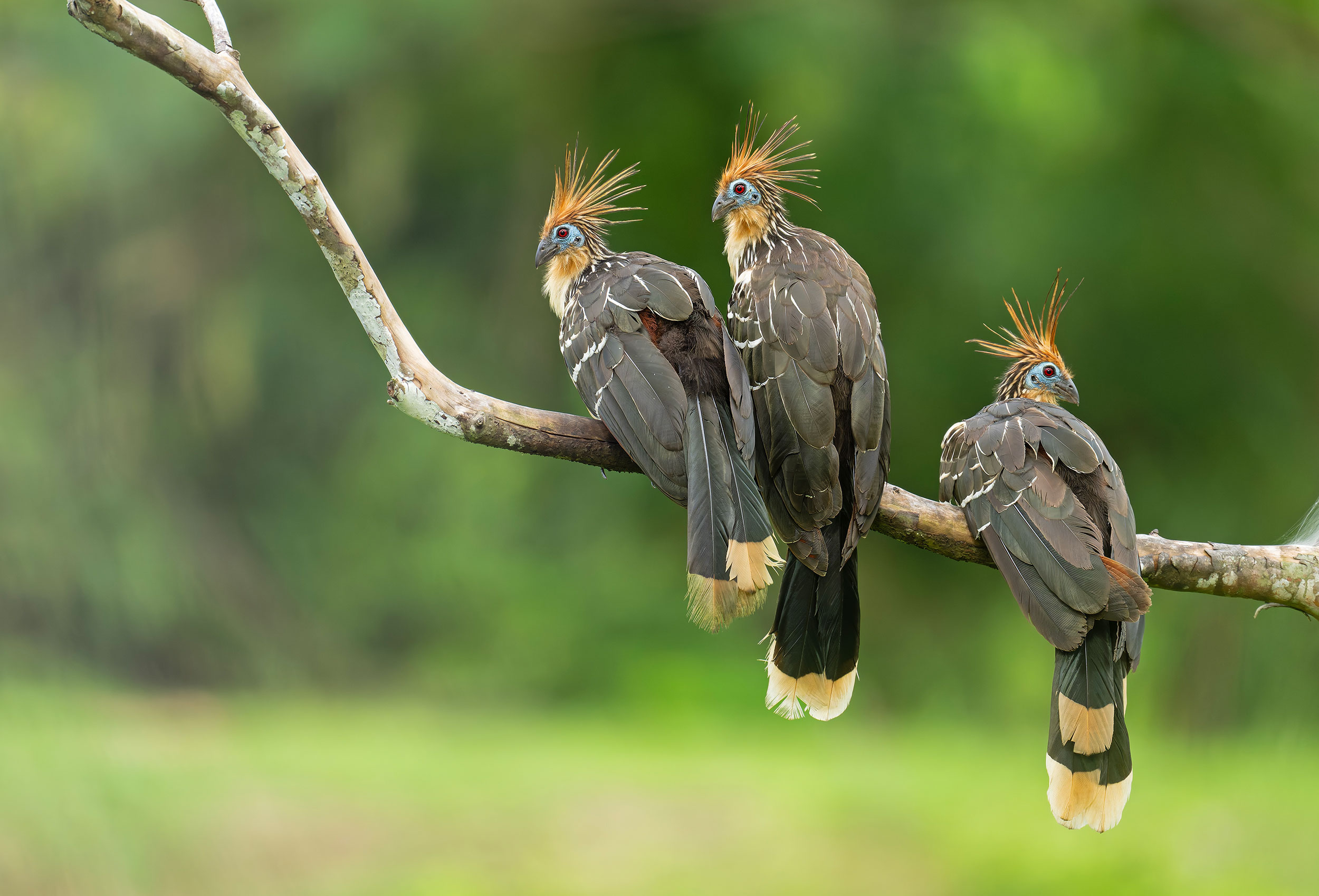
On our way to our next birding destination, Laguna El Oconal, we made several stops along the road. Here we observed Masked Crimson Tanager, White-eyed Parakeet, Chestnut-eared Aracari, Red-capped Cardinal, Black-and-white Seedeater, Yellow-bellied Seedeater, Blue-black Grassquit, Barred Antshrike, Speckled Chachalaca, Yellow-tufted Woodpecker, Tropical Kingbird, Blue-and-yellow Tanager, Turquoise Tanager, Blue-headed Parrot, Yellow-rumped Cacique, and a family of Hoatzins.
Before heading to the lake, we enjoyed a pleasant lunch in the town of Villa Rica, accompanied by fresh quito-quito (Solanum quitoense) juice. This tangy, citrus-like fruit from the Andes (Ecuador, Colombia, and Peru) is rich in vitamins and antioxidants and very refreshing.
With our bellies full, it was time to visit Laguna El Oconal, a beautiful lake covered with water lilies and surrounded by lush green forest. Local legend tells that in October, a virgin spirit appears at the lake, glowing with golden light and guarded by a great anaconda. Linked to the Virgin of Fátima, she is revered by locals as a symbol of faith and mystical power. The virgin did not appear to us—nor did the anaconda. Maybe because it was already November… What did appear, however, was an abundance of birds—and that was exactly what we came for.
On the lake we observed Yellow-billed Teal, Purple Gallinule, Limpkin, Wattled Jacana, Spotted Sandpiper, Least Grebe, Snowy Egret, Striated Heron, Cocoi Heron, and Common Gallinule.
In the surrounding forest, we enjoyed many excellent sightings. A pair of Common Tody-Flycatchers was busy constructing their nest, beautifully weaving strands of grass into a hanging basket. Other flycatchers included Rusty-fronted Tody-Flycatcher, Alder Flycatcher, and Short-crested Flycatcher. We also observed Stripe-chested Antwren and added another endemic species to our list: the Creamy-bellied Antwren, a small antwren found in the canopy of foothill forests along the eastern Andes of central Peru.
A handsome Hook-billed Kite gave us great views as it hopped through the branches. A Bluish-fronted Jacamar rested quietly on a branch from a tree nearby.
In a wet area covered with grasses and reeds, we heard the call of the elusive Blackish Rail and decided to try our luck. After waiting patiently, it briefly appeared—never fully in the open—before quickly disappearing again. Still, we were delighted, as it was a lifer for most of us.
That afternoon we recorded 51 species, including Barred Antshrike, Ash-browed Spinetail, Plain-crowned Spinetail, Eastern Kingbird, Olivaceous Greenlet, Southern Rough-winged Swallow, Tropical Parula, Black-faced Tanager, Peregrine Falcon, Snail Kite, and a pair of tiny Ocellated Piculets.
We spent the night in a comfortable hotel in Villa Rica.
Days 8 and 9 – Bosque Sho’llet
We passed Laguna El Oconal once again and followed the road downhill to explore the surrounding forest. It was a very sunny day, which made birding more challenging, as the activity was generally low. Nevertheless, we recorded an variety of species, including Red-throated Caracara, Black Hawk-Eagle, Double-toothed Kite, Little Woodpecker, Lineated Woodpecker, Yellow-tufted Woodpecker, Lafresnaye’s Piculet, Chestnut-backed Antshrike, Olivaceous Woodcreeper, Plain-brown Woodcreeper, Ocellated Woodcreeper, Inambari Woodcreeper, Streaked Xenops, White-bellied Pygmy-Tyrant, Olive-faced Flatbill, Coraya Wren, Common Squirrel-Cuckoo, and Scarlet Tanager.
In the afternoon, we visited the beautiful Bosque Sho’llet. This conservation area lies on a misty highland plateau at around 2,200 meters above sea level and is characterized by grasslands, low shrubs, and five small lakes. The area has a cool, humid climate with frequent mist and moderate winds, typical of lower montane cloud forest. According to the indigenous Yánesha people who live in the area, Sho’llet means “Queen of the Colored Snails” and refers to a local legend in which a grieving princess filled the five small lakes—known as the “Tears” or “Mirrors of Sho’llet”—with her sorrow. A truly mystical place to go birding.
The afternoon began sunny, and bird activity was initially low, but we managed to find several nice species, including Sickle-winged Guan, Band-tailed Pigeon, Speckled Hummingbird, Long-tailed Sylph, Collared Inca, Blue-banded Toucanet, and Mottle-cheeked Tyrannulet.
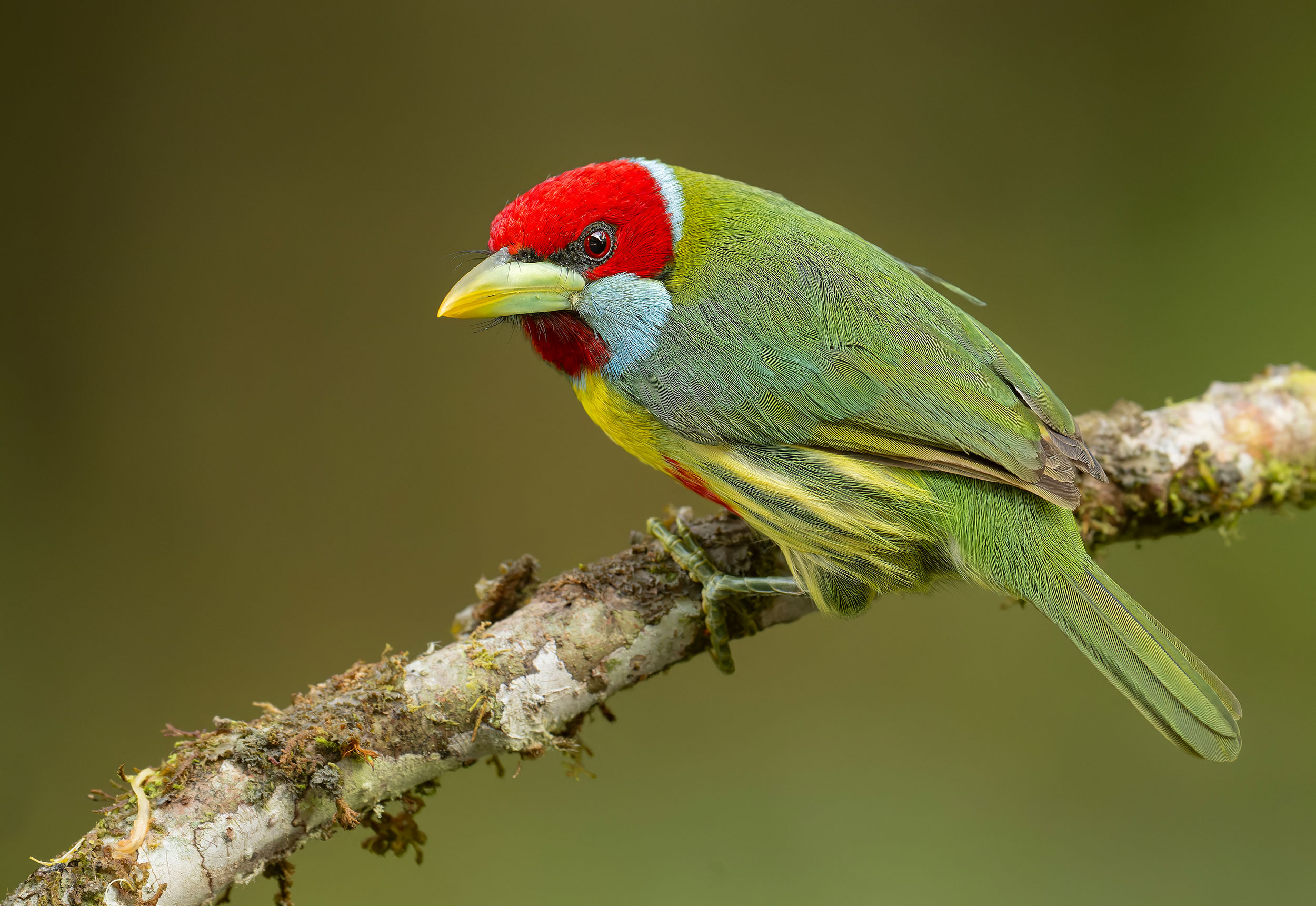
The next morning, we paid another visit to Bosque Sho’llet, where we enjoyed breakfast in the field. Sun and thick fog alternated constantly, creating dramatic conditions. We birded along the road again where we encountered Hook-billed Kite, Plumbeous-crowned Tyrannulet, Rufous-tailed Tyrant, Green Jay, Glossy-black Thrush, Spectacled Redstart, Silvery Tanager, Versicolored Barbet, Powerful Woodpecker, Golden-olive Woodpecker, Peruvian Tyrannulet, Blue-winged Mountain-Tanager, and the striking Streak-headed Antbird, among others.
In the afternoon, we undertook a long drive of several hours to the mining town of La Oroya. The long drive was entirely dictated by our birding plans for the following day.
Day 10 – Lake Junín
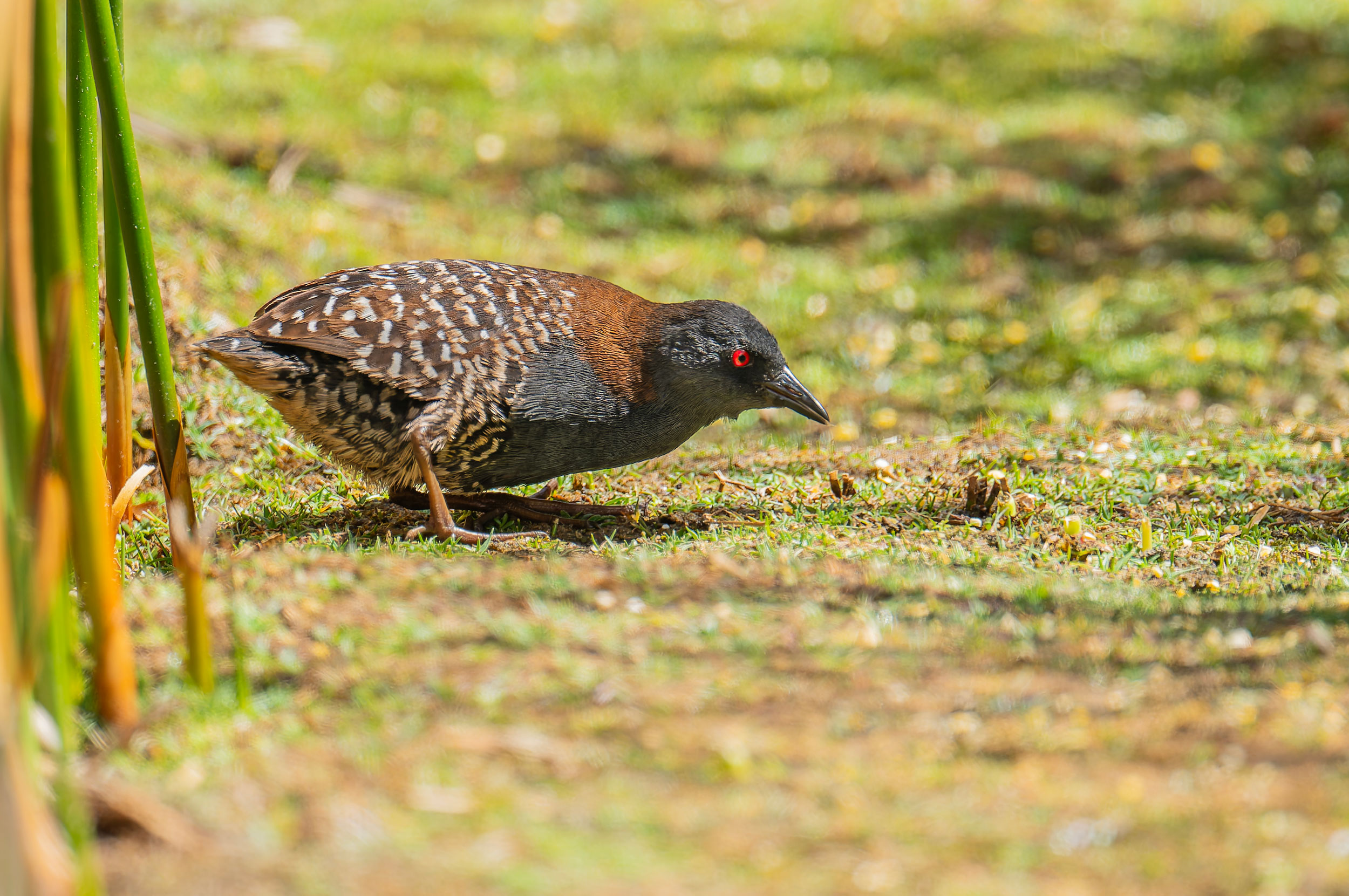
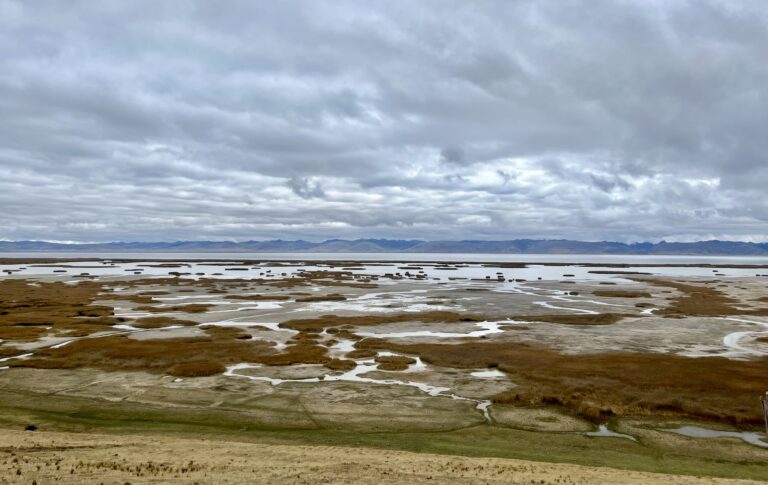
Some very special targets were on the agenda today, all to be found at Lake Junín, a two-hour drive away from La Oroya. Local guide César Donato was waiting for us in a small town located at the lake to help us find the unique species: the Junín Rail (Laterallus jamaicensis tuerosi), a subspecies of the Black Rail, and the Junín Grebe. Both are endemic to this lake.
We began with the Junín Rail. César has habituated the birds to feeding on corn, which greatly increases the chances of seeing them. After a short walk and a careful approach through dense reeds, he guided us to two small clearings. Responding to calls, the rails briefly appeared three times. This species is extremely shy, fast, and small, making it a real challenge to observe—and even more so to photograph.
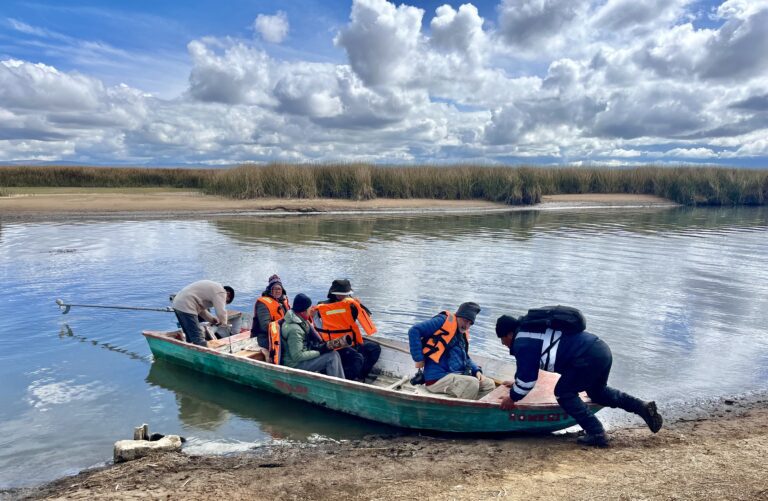
We then returned to the minivan and drove to the lakeshore, where half of the group joined César in a small boat. As the boat could accommodate only a few people, those who had already seen the Junín Grebe stayed ashore. Conditions on the lake were excellent, with bright sunshine and wide-open views. The boat group enjoyed multiple sightings of Junín Grebes, including one individual very close to the boat. This flightless grebe is confined entirely to Lake Junín in the highlands of west-central Peru and is classified as Critically Endangered. Its population is currently estimated at fewer than 250 individuals, with pollution and extreme fluctuations in water quality and water levels being major threats.
Other birds recorded by the boat group included several migratory species, such as Hudsonian Godwit, Wilson’s Phalarope, Spotted Sandpiper, Lesser Yellowlegs, and Greater Yellowlegs, as well as resident aquatic birds including Andean Avocet, Giant Coot, Yellow-billed Pintail, Puna Teal, Andean Duck, Crested Duck, White-tufted Grebe, and Chilean Flamingo.
On our way back from the lakeshore, we encountered two Ornate Tinamous running across the road, and César also showed us a beautiful pair of Lesser Horned Owls resting quietly in Polylepis trees.
After the boat excursion, we continued our journey toward the city of Huánuco. We enjoyed a picnic lunch in the field, but dark clouds rolling over the mountaintops soon brought hail, forcing us to finish our meal quickly.
Along the road, we made several birding stops in search of additional endemic and target species. We observed two Torrent Ducks at close range in a small river below us, seemingly performing a display for a hidden female. A Thick-billed Siskin—a lifer for nearly everyone—flew past, and dozens of Brown-bellied Swallows were gathered on an orange-colored rock wall, using it as a resting site. Finally, a great opportunity for photography, as swallows in flight are notoriously difficult to capture.
We arrived late in the afternoon in Huánuco, where we enjoyed a tasty dinner at the beautiful Gran Hotel Huánuco.
Day 11 – Tunel Carpish
Today we visited Tunel Carpish, following a quiet dirt road descending just beyond the tunnel. The vegetation here is lush and green, although unfortunately each year more forest is being cleared to make way for hydrangea plantations.
We observed several hummingbird species, including Amethyst-throated Sunangel, Tyrian Metaltail, and Violet-throated Starfrontlet, while graceful Swallow-tailed Kites soared overhead. One of the highlights of the day was an endemic Yellow-scarfed Tanager, a species we had been eagerly searching for. We also encountered other attractive tanagers, such as Hooded Mountain-Tanager, Grass-green Tanager, and Lacrimose Mountain-Tanager.
Other interesting species we saw that afternoon, included Moustached Flowerpiercer, Streaked Tuftedcheek, Rusty-winged Barbtail, Crimson-mantled Woodpecker, and the Peruvian Slaty Brushfinch, another endemic species of central Peru.
Day 12 – Bosque Unchog
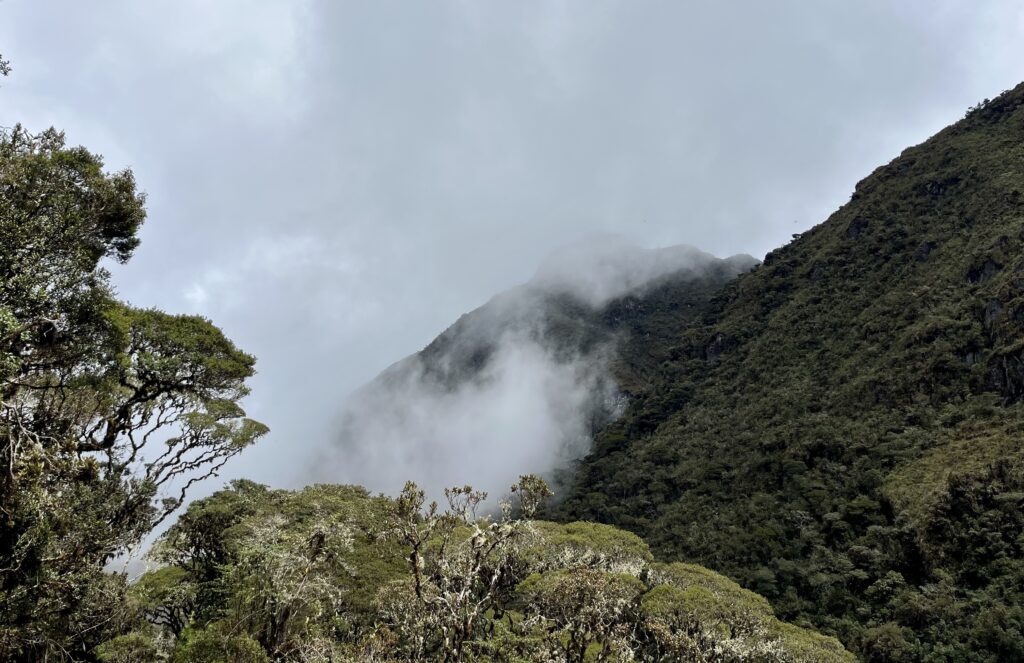
We devoted the entire day to the mystical elfin forest of Bosque Unchog, home to numerous endemic species. This fog-draped landscape of cloud forest, Andean páramo, bogs, and Puna grasslands lies on the upper eastern slopes of the Carpish Range, within the communal lands of Cochabamba in the Huánuco region, at elevations between 3,400 and 3,650 meters above sea level.
In the mid-1970s, the LSU Museum of Zoology organized a scientific expedition to Bosque Unchog. Among the participants were local guide Reyes Rivera and Ted Parker, who would later become one of the most influential authorities on Neotropical birds before his life was tragically cut short in a plane crash. During this expedition, the team documented two bird species previously unknown to science: the Golden-backed Mountain-Tanager and Bay-vented Cotinga. Of course we were eager to find them!
After an early breakfast prepared by Miguel at the entrance of Bosque Unchog, we began our walk. Right at the start, we encountered a Coppery Metaltail perched on top of a shrub—our first endemic species of the day. This hummingbird, with its striking coppery plumage, is restricted to tree line forests and scrub in the Andes of northern and central Peru. We also observed two other hummingbirds: Violet-throated Starfrontlet and Great Sapphirewing.
As we walked downhill through Puna and Páramo, sun and fog chased each other. Along the trail, we encountered a variety of interesting species, including Line-fronted Canastero, White-chinned Thistletail, Scarlet-bellied Mountain-Tanager, White-browed Conebill, and Black-throated Flowerpiercer.
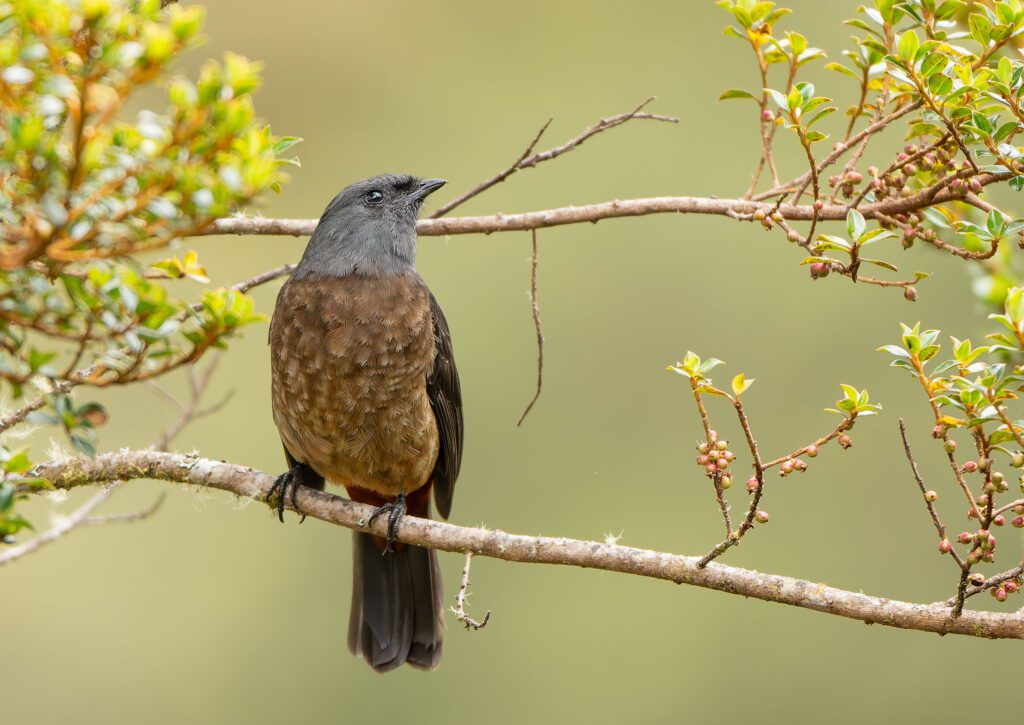
Upon reaching a more forested section, we were very happy to spot a beautiful pair of Bay-vented Cotingas, an endemic species restricted to very high-elevation forests on the eastern slopes of the central Peruvian Andes. We also saw a small group of Parduscos, meaning “brownish” in Spanish—a fitting description for this subtly colored tanager. This species was unknown to science until 1973 and is found only in a few patches of wet elfin forest in the high Andes of central Peru, like Bosque Unchog.
Unfortunately, we could not continue further along the trail, as the stones in a small stream that we had to cross were too wet and slippery to pass safely. We decided instead to wait for our most anticipated target: the beautiful Golden-backed Mountain-Tanager. Despite waiting patiently, it never appeared.
We did, however, observe a Streak-crowned Mountain-Tanager, another attractive endemic species whose range extends from humid cloud forest south of the Marañón River in Amazonas to Cusco. Unfortunately, we also missed the endemic Rufous-browed Hemispingus…
Overall, it was a quiet day, with only 14 species recorded. We suspected that many birds were nesting, about a month later than usual, as almost no bird appeared or was singing—likely busy feeding their young. Still, the magnificent landscapes of Bosque Unchog, with fog rolling in and out, softened our disappointment, as did the cold pizza lunch that Miguel brought to us far into Bosque Unchog.
Day 13 – Tunel Carpish and Tingo María National Park
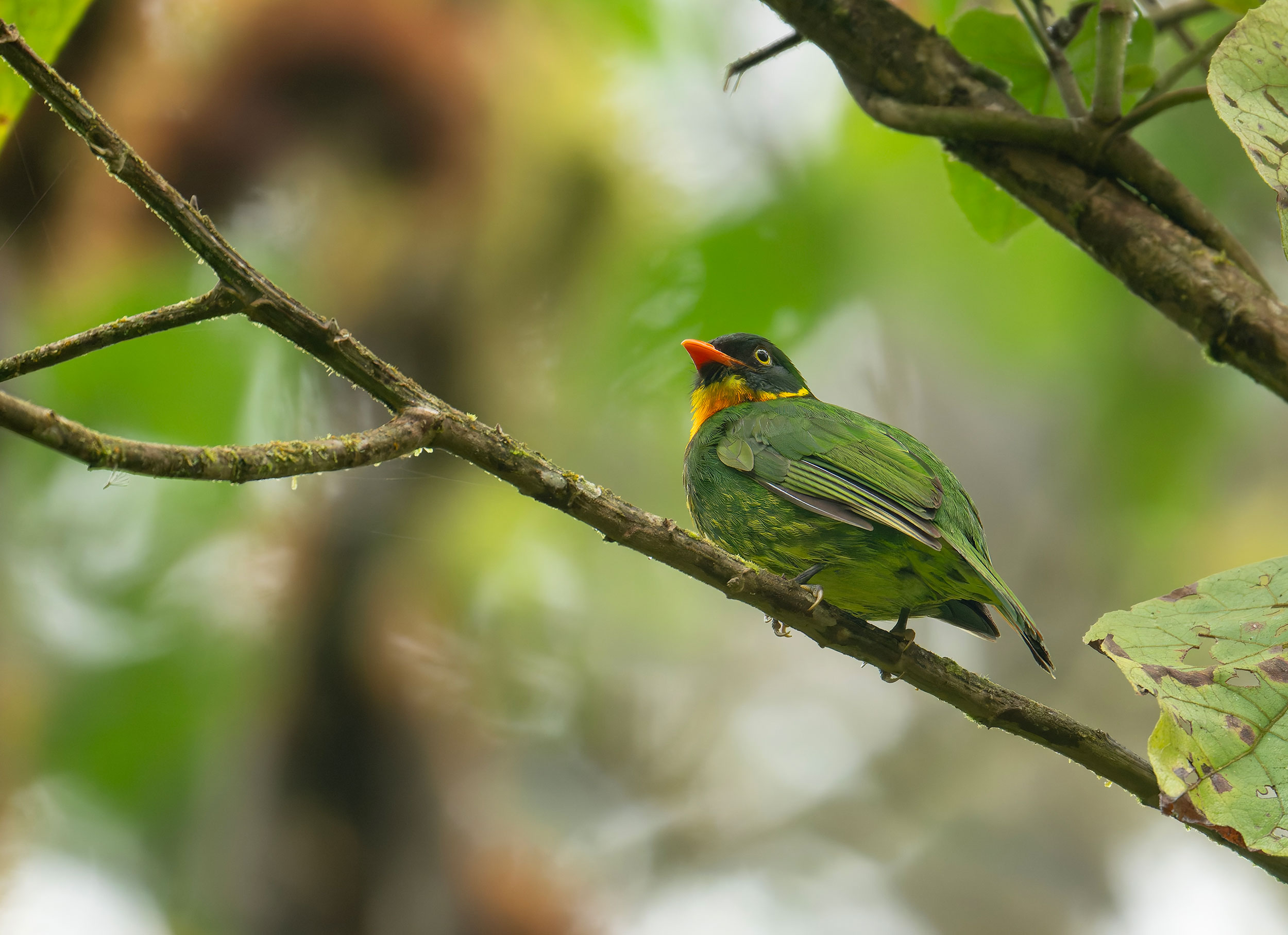
On our way to our next destination, Tingo María, we made another stop along the small community road near Tunel Carpish, where we had birded earlier in the trip. This peaceful cloud forest road, free of traffic, proved very rewarding. We enjoyed good views of two White-eared Solitaires engaged in a territorial quarrel, and finally found a handsome pair of Masked Fruiteaters, a species we had been searching for. This chunky and colorful bird is endemic to the eastern slopes of the Andes in Peru.
Other species recorded included Fawn-breasted Brilliant, Broad-winged Hawk, Azara’s Spinetail, Cinnamon Flycatcher, White-tailed Tyrannulet, Blue-and-white Swallow, Mountain Wren, Great Thrush, Mountain Cacique, Russet-crowned Warbler, Slate-throated Redstart, Spectacled Redstart, Golden Grosbeak, Blue-capped Tanager, Golden-naped Tanager, and Beryl-spangled Tanager.
We continued our journey into the warm, humid Amazonian forest of Tingo María, where heavy rain greeted us. Lunch was enjoyed at the entrance to Tingo María National Park (Parque Nacional Tingo María), located in the districts of Rupa-Rupa and Mariano Dámaso in the Huánuco region. Established in 1965, the park covers 4,777 hectares and encompasses a mountain massif known as La Bella Durmiente (“The Sleeping Beauty”).
The park is famous for the Cueva de las Lechuzas (“Cave of the Owls”), a misleading name, as the cave is actually home to a very different bird species—as we would discover the following day.
After lunch, we crossed a long, wooden, and slightly wobbly suspension bridge over the fast-flowing Huallaga River for our first birding session in the park. With rain still falling heavily, we sought shelter at the park ranger station, where we were welcomed with a warm cup of coffee. When the rain finally eased late in the afternoon, we set off along a trail following a small river, accompanied by the beautiful song of a Hauxwell’s Thrush.
Before darkness fell, we recorded several migrant species, including Canada Warbler, Spotted Sandpiper, Red-eyed Vireo, and Swainson’s Thrush, as well as a variety of resident birds such as Gray-fronted Dove, Green-backed Trogon, Blue-headed Parrot, Andean Cock-of-the-rock, Crested Oropendola, Amazonian Yellow-rumped Cacique, Buff-rumped Warbler, Magpie Tanager, Blue-necked Tanager, Purple Honeycreeper, and Green Honeycreeper.
As night approached, we called it a day, and Miguel drove us to our hotel in the city of Tingo María.
Day 14 – Cueva de las Lechuzas, Tingo María National Park
The next day, we returned early to the park for a visit to the Cueva de las Lechuzas—a vast and impressive cave that is home not to owls, but to a large colony of Oilbirds. This remarkable species is the only volant, nocturnal, frugivorous bird in the world. Oilbirds inhabit evergreen lowland and montane forests from sea level to over 3,000 meters, ranging from northern Venezuela and Trinidad south to Bolivia. They breed and roost in caves, sometimes in colonies numbering nearly 10,000 individuals.
The Cueva de las Lechuzas is accessed by stairs, and inside by wooden walkways that lead deep into the darkness—where you can see nothing, but can clearly hear, smell, and feel the birds as they fly past like shadows and perch on the cave walls. It was a surreal and unforgettable experience.
The Oilbirds share the cave with bats and cockroaches, which happily feed on bird and bat droppings. At the cave entrance, White-eyed Parakeets and Black Vultures were resting on the rock walls.
Around the cave, we recorded additional species, including Hoatzin, Black-fronted Nunbird, Gilded Barbet, Golden-collared Toucanet, Blue-headed Macaw, Spot-winged Antshrike, Peruvian Warbling-Antbird, Black-faced Antbird, Olivaceous Woodcreeper, Plain-brown Woodcreeper, Buff-throated Woodcreeper, Black Phoebe, and Violaceous Jay.
This marked our final birding day in central Peru. The following day, we would fly back to Lima, where one last birding destination awaited us: the Villa Marshes.

Day 15 – Villa Marshes, Lima
After an early flight from Huánuco to Lima, we headed straight to the Pantanos de Villa, or Villa Marshes in English, located within the city of Lima, Peru. These wetlands cover 263 hectares and consist of brackish lagoons, islands, channels, totora reed beds, salt marshes, and grasslands. The Villa Marshes are the only protected natural area within the urban limits of Peru’s capital.
It is a wonderful place to escape the bustle of the city and an excellent birding site. Approximately 210 bird species have been recorded here, around 70% of which are migratory. These include species from the Nearctic region of North America (September–March), the Austral region of southern South America (April–August), and the Peruvian high Andes (April–August).
As we visited in November, we were able to observe a good number of Pacific Flyway migrants in the marshes and along the nearby beach, including Spotted Sandpiper, Sanderling, Least Sandpiper, Semipalmated Sandpiper, Franklin’s Gull, Killdeer, Hudsonian Whimbrel, and Willet.
Within the marshes we observed Cinnamon Teal, White-cheeked Pintail, Plumbeous Rail, Common Gallinule, Slate-colored Coot, Neotropic Cormorant, Puna Ibis, Black-crowned Night Heron, Little Blue Heron, Snowy Egret, Western Cattle Egret, Great Egret, Black Vulture, Turkey Vulture, Wren-like Rushbird, Many-colored Rush Tyrant, West Peruvian Dove, Vermilion Flycatcher, Southern House Wren, and Scrub Blackbird.
Along the beach, we encountered a variety of gulls, including Andean Gull, Gray-hooded Gull, Gray Gull, Belcher’s Gull, and Kelp Gull, as well as other coastal species such as American Oystercatcher, Black Skimmer, Sandwich Tern, Peruvian Booby, and small groups of magnificent Peruvian Pelicans gliding low over the powerful Pacific waves.
It was a perfect conclusion to our tour—filled with unique species and Peru’s extraordinary landscapes—an experience we will never forget.
Written by Eva Wu – Photos: Steve Sánchez & Eva Wu
Would you like to join us on our next adventure to Central Peru? You can find the tour description on our website. For a detailed itinerary and pricing, feel free to contact us.
Sources:
Birds of the World
Wikipedia
Company Address:
Kuntur Nature and Adventure EIRL
Av. Industrial Conj. Hab. FOVIPOL. Nr 104
Santiago – Cusco – Peru
This website uses cookies to ensure security and improve functionality.
Kuntur Birding © 2026 All Rights Reserved