
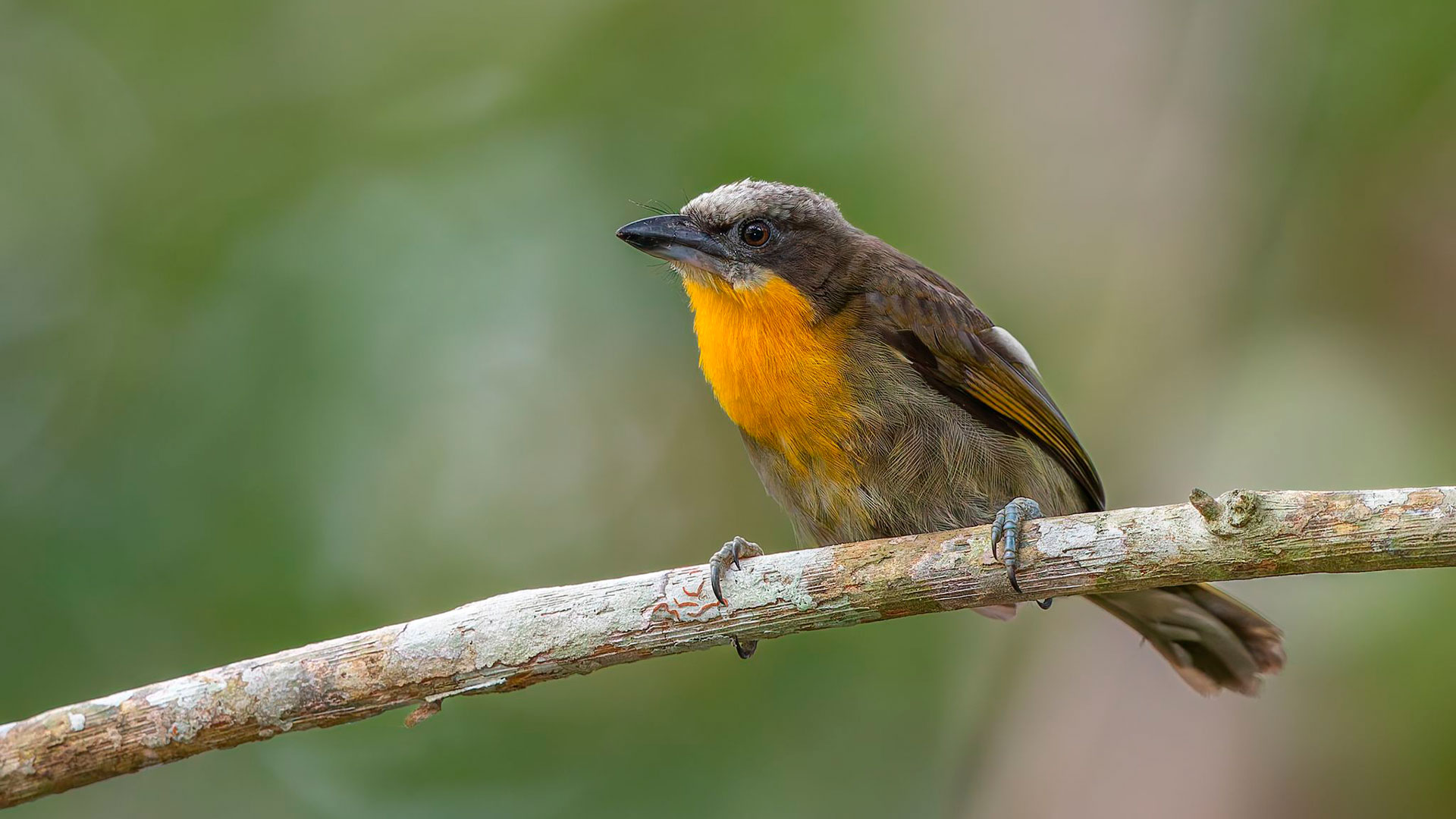
AMAZON RIVER PERU BIRDING TOUR
Allpahuayo Mishana, Iquitos, River Islands
12 days
DATES
Dates: 5–16 June 2027, 6–17 November 2027
Contact us to arrange your preferred travel dates
OVERVIEW
Western Amazonia is known to be one of the richest areas in bird species in the entire Amazon Basin. During this 12-day birding tour, we will explore the different habitats of the Upper Amazon River around the city of Iquitos in northeastern Peru, including river islands and the white-sand forest.
We will start our tour with a flight from Lima to the city of Iquitos, located in the Amazon Basin and surrounded by the Amazon, Nanay, and Itaya rivers. Founded during the rubber and timber boom of the 19th century, Iquitos is the largest city in the world accessible only by river and air, as there are no roads connecting it to the outside world.
Not far from Iquitos, two major rivers of Peru, the Marañón and Ucayali, meet to form the majestic Amazon River, creating a variety of habitats, including river islands. Each habitat is home to its own specialized bird species.
More than 600 bird species have been recorded in this area. We will search for interesting Amazonian species that are specialists of these restricted and unique habitats, such as Chestnut-belted Gnateater, Pavonine Quetzal, Black-necked Red Cotinga, Undulated Antshrike, Reddish-winged Bare-eye, Band-tailed Cacique, and the endangered Wattled Curassow.
The Amazon River also forms a natural barrier, with different bird species occurring on the northern and southern banks. The river islands themselves support distinct types of vegetation and their own specialized birdlife. The rich variety of river island specialists includes Zimmer’s Woodcreeper, Pale-billed Hornero, White-bellied Spinetail, Black-and-white Antbird, Olive-spotted Hummingbird, and Parker’s Spinetail, to name just a few.
The white sand forests of Allpahuayo Mishana close to Iquitos are a unique and fragile environment where we can find special bird species, several of them only recently discovered and described by science, like Ancient Antwren, Allpahuayo Antbird, Mishana Tyrannulet and Iquitos Gnatcatcher.
The terra firme ecosystems at ACTS Field Station, with access to a canopy walkway of 500 meters (one-third of a mile), offer fantastic birding opportunities at 35 meters (115 feet) above the ground among giant trees. Here and along the trails on the property, we may encounter interesting and rare species such as Black-faced Hawk, Dugand’s Antwren, Ochre-striped Antpitta, Red-billed Ground-Cuckoo, and, with luck, the remarkable Nocturnal Curassow.
All these diverse habitats and their unique bird species can be found around Iquitos, offering a truly unique birding experience during our Amazon River Birding Tour.
If you would like to learn more about the birds and locations featured in this tour, you can read our trip report on birding around Iquitos.
ITINERARY
Day 1: Arrival at Lima Airport and transfer to the hotel. Overnight in Lima.
Day 2: Transfer to Lima Airport for a flight to Iquitos, followed by a boat journey to Muyuna Lodge in the Tamshiyacu-Tahuayo National Reserve. Overnight at Muyuna Lodge.
Days 3–4: Birding by boat and on foot in the varzea forest and river islands around Muyuna Lodge. Overnight at Muyuna Lodge.
Day 5: Morning birding around Muyuna Lodge, followed by an afternoon boat transfer to Iquitos. Overnight at a hotel in Iquitos.
Days 6–7: Two days of birding in the Allpahuayo-Mishana Reserve including the white-sand forest. Overnight at a hotel in Iquitos.
Days 8–10: Transfer by boat to ACTS Field Station for three days of birding in the terra firme ecosystem, with access to a canopy walkway offering fantastic birding opportunities. Overnight at ACTS Field Station.
Day 11: Morning birding around ACTS Field Station, followed by transfer to Iquitos and a flight to Lima. Overnight at a hotel in Lima.
Day 12: Transfer to Lima Airport for your flight home, marking end of the tour.
KEY SPECIES
Endemic species: Iquitos Gnatcatcher, Mishana Tyrannulet, Allpahuayo Antbird.
Near-endemic species: Ancient Antwren.
Other species: Nocturnal Curassow, Wattled Curassow, Chestnut-belted Gnateater, Pavonine Quetzal, Black-necked Red Cotinga, Band-tailed Cacique, Casqued Cacique, Zimmer’s Woodcreeper, Pale-billed Hornero, Dugand’s Antwren, Lanceolated Monklet, Scarlet-crowned Barbet, Cinnamon Manakin-Tyrant, Orange-crowned Manakin, White-crowned Manakin, Wire-tailed Manakin, Purple-throated Cotinga, Pompadour Cotinga, Orange-fronted Plushcrown, Chestnut-shouldered Antwren, Varzea Schiffornis, Spotted Tody-Flycatcher, Zigzag Heron, American Pymy-Kingfisher, Short-tailed Parrot, Riparian Parrotlet, Sapphire-rumped Parrotlet, Ringed Woodpecker, Yellow-throated Woodpecker, Waved Woodpecker, Plain-breasted Piculet, Dull-capped Attila, Blue-cheecked Jacamar, Yellow-billed Jacamar, Paradise Jacamar, Black-bellied Cuckoo, Red-billed Ground-Cuckoo, Leaden Antwren, Bicolored Conebill, Brownish Elaenia, Citron-bellied Elaenia, Gray-legged Tinamou, Brown-banded Puffbird, Spotted Puffbird, Collared Puffbird, Cinammon-crested Spadebill, Brown Nunlet, White-fronted Nunbird, Black-faced Hawk, Ochre-striped Antpitta, Striated Antthrush, Gray-winged Trumpeter, White-browed Purpletuft, Reddish-winged Bare-eye, Black-spotted Bare-eye, Great Potoo, White-winged Potoo, Rufous Potoo, Crested Owl, Amazonian Pygmy-Owl, Ferruginous Pygmy-Owl, Ash-breasted Antbird, Black-and-white Antbird, Black-tailed Antbird, Yellow-browed Antbird, Zimmer’s Antbird, Sooty Antbird, White-plumed Antbird, White-bellied Spinetail, Parker’s Spinetail, Red-and-white Spinetail, Yellow-chinned Spinetail, Saturnine Antshrike, Black-crested Antshrike, Castelnau’s Antshrike, Fulvus Antshrike, Undulated Antshrike, Fasciated Antshrike, Black-throated Brilliant, Olive-spotted Hummingbird, Straight-billed Hermit, Needle-billed Hermit, Glittering-throated Emerald.
TOUR DETAILS
Best Season: April to November
Group Size: Maximum 8 participants + tour guide
Physical Difficulty: Moderate
Accommodation: Basic to comfortable (3-star hotels)
Transportation: Private vehicle (car/minivan), plane, boat
Habitats Covered: Amazon River, Amazon rainforest (várzea and terra firme), river islands, white-sand forest
Climate: Warm and humid, with rain ranging from brief showers to occasional extended periods of heavy rain.
Guide: Experienced English- and Spanish-speaking birding guide
Possible extensions:
– Lima: Pacific Ocean boat tour Pucusana & Villa Marshes
– Lima: Endemic birds of Santa Eulalia
– Cusco: Birding and Machu Picchu
CONTACT
For the detailed itinerary, prices, or if you have questions, please get in touch with us.
Si desea recibir el itinerario detallado en español, no dude en hacérnoslo saber.
PHOTO GALLERY


Company Address:
Kuntur Nature and Adventure EIRL
Av. Industrial Conj. Hab. FOVIPOL. Nr 104
Santiago – Cusco – Peru
This website uses cookies to ensure security and improve functionality.
Kuntur Birding © 2026 All Rights Reserved